
What to Do With a Broken Rudraksha Bead
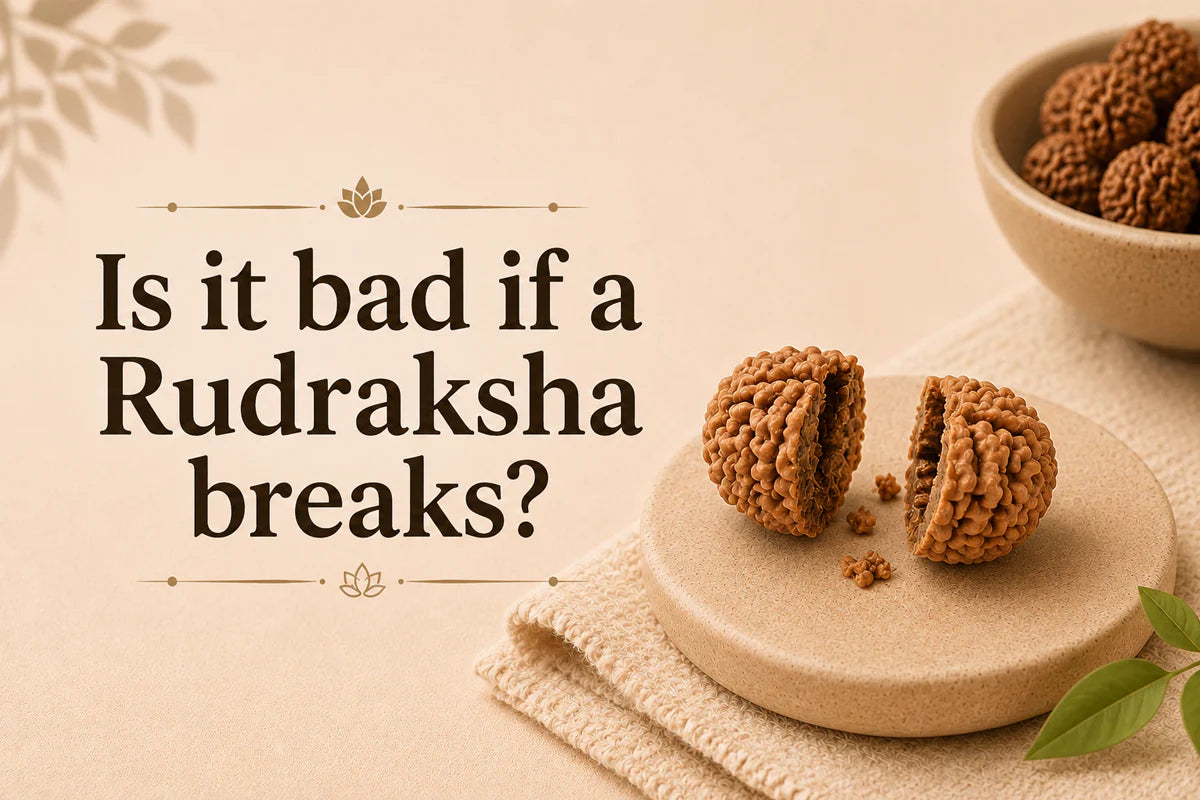
A broken Rudraksha usually isn't a bad omen. The older tradition treats a broken bead as one to retire from wear, and plenty of wearers read the break as the bead having taken something on for them. What follows are three steps: stop wearing it, release it respectfully in water or earth, and replace it if you want to carry on. Scripture guides whether you should keep wearing a damaged bead. It says nothing about the break bringing misfortune.
You take the mala off at night, and there it is. A bead split clean along one of its lines, or a hairline crack your thumb finds before your eyes do. For most people, the first thought is that something has gone wrong, spiritually.
But usually, it hasn't.
This guide walks through what a broken rudraksha bead actually means, what the scriptures say about a damaged bead, whether you can still wear it, how to let it go with respect, and how to stop it happening again.
Is it bad if a Rudraksha breaks?
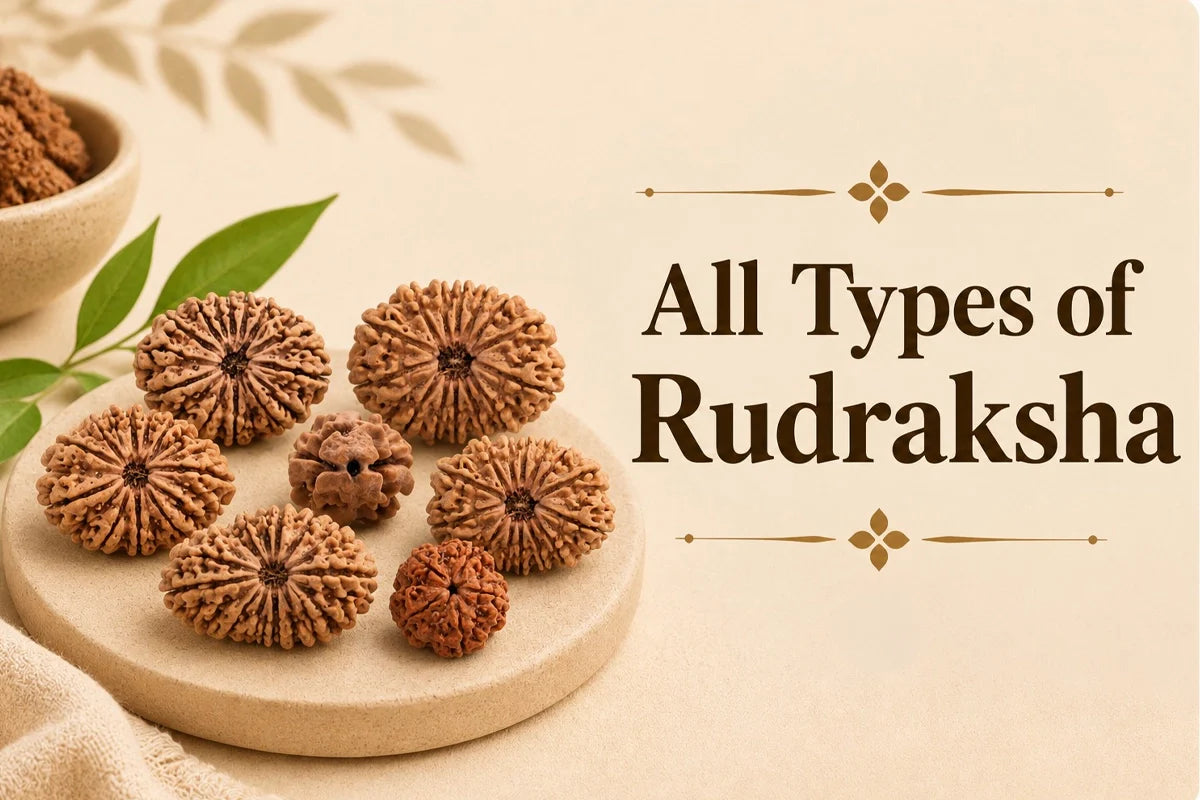
No, and it isn't a reason to panic. Two explanations usually apply, and both can be true at the same time. The spiritual one: the bead may have finished the job it was doing for you, or taken on some of the negativity around you. The practical one is duller. Rudraksha is a seed. Seeds dry out, they age, and under enough pressure they crack. Treat this as a sign to care more, not fear.
What the scriptures say about a damaged Rudraksha
The tradition does mention damaged beads, and it's worth reading closely because people quote it loosely.
The Vighneshwar Samhita and the Devi Bhagavata both describe the hīna, the deficient Rudraksha a seeker shouldn't wear. The list runs through beads that are worm-eaten, broken (bhagna), missing their natural thorn-like ridges, marked by a wound or gash, or not properly round.
One line from the Devi Bhagavata is direct about it:
krimi duṣṭaṃ chinna-bhinnaṃ kaṇṭaka-hīnam eva cha,
vraṇa-yuktam avṛtaṃ cha rudrākṣān ṣaḍ vivarjayet.
Set aside the six kinds that are worm-eaten, split, without ridges, wounded, and not round.
When you pay close attention to what is written, you would see that a broken bead is no longer fit for wear in worship. That's a rule about fitness for ritual wear, nothing more. The texts don't explicitly say that it brings bad luck, and no verse claims it does.
Can you still wear a cracked Rudraksha?
Depends on what led to the broken Rudraksha bead.
|
What happened |
What to do |
|
Fully split, lost its round shape, or a Mukhi line broken through |
Not fit for wear by tradition. Retire and release it. |
|
Hairline surface crack, bead whole, Mukhi lines clear, hole sound |
Still wearable. Clean it, cap it in silver if you want it protected. |
|
Only the thread or the bore hole gave way |
The bead's fine. Just re-string it. |
If you're still not sure, or the bead is rare or expensive, ask a purohit who knows before you decide anything.
What should you do with a broken Rudraksha?
A bead you're retiring gets released with respect. It doesn't go in the bin with the kitchen scraps, rather you can immerse it in flowing water, such as a clean river or any moving water body. You can leave it at the roots of a sacred tree, usually a Peepal or a Bael. Or you can return it to the earth, buried in a clean, undisturbed spot, or hand it to a temple that accepts broken beads.
Before you let go, thank the bead for its service and say Om Namah Shivaya. That's enough and no ceremony is needed.
Why do Rudraksha beads break, and how to prevent it?
Most of the time it's dryness, age, or rough handling. Soap, perfume and hot water eat at the surface slowly. A drop or a hard knock can split one outright. And cheap or chemically treated beads give out much faster than real ones, which is one more reason to buy from someone you trust.
Keeping a bead in good shape isn't much work. Work a little natural oil into it now and then; sandalwood or mustard both do the job, and mustard leaves that faint sharp smell you'll come to recognise. Take the mala off before the gym, before a shower, before bed, and keep it clear of chemicals. Re-string an old mala before the thread frays through, and when it's not on you, keep it somewhere clean and dry.
Does a broken Rudraksha bring bad luck?
This is the fear that sends most people looking, so here's the answer. The scriptures rule on whether a broken bead is fit for wear, and yes, they say a broken one should be retired. But fitness for wear is a different question from fortune. No verse in the Vighneshwar Samhita, the Devi Bhagavata, or the Shiva Purana ties a broken bead to bad luck. Retiring it follows the tradition. Fearing misfortune follows a myth. A sacred object is there to steady you, not to scare you.
How to begin again
If your bead's gone, retire it with respect and replace it when you're ready. A genuine, well-kept Rudraksha lasts years. Pick one with clear Mukhi lines from a source you trust, get it energised properly, and carry on.
Frequently Asked Questions
Is it bad luck if my Rudraksha breaks? No. Scripture treats a broken bead as unfit for continued wear, which is the reason it's retired. It doesn't call the break a source of bad luck. Fitness for wear and fortune are two separate things.
Can a broken Rudraksha be worn again? A fully broken or misshapen bead isn't fit for wear, going by the hīna Rudraksha verses. A shallow hairline crack with the Mukhi lines intact can usually go back on after a proper cleaning.
How do I dispose of a broken Rudraksha bead? Let it go with respect: flowing water, the roots of a Peepal or Bael, clean earth, or a temple. Never household waste.
Why did my Rudraksha crack? Usually dryness, age, chemicals, or a knock. Sometimes it's just a low-quality bead. The physical causes are real and common. The spiritual reading is yours to take or leave.