
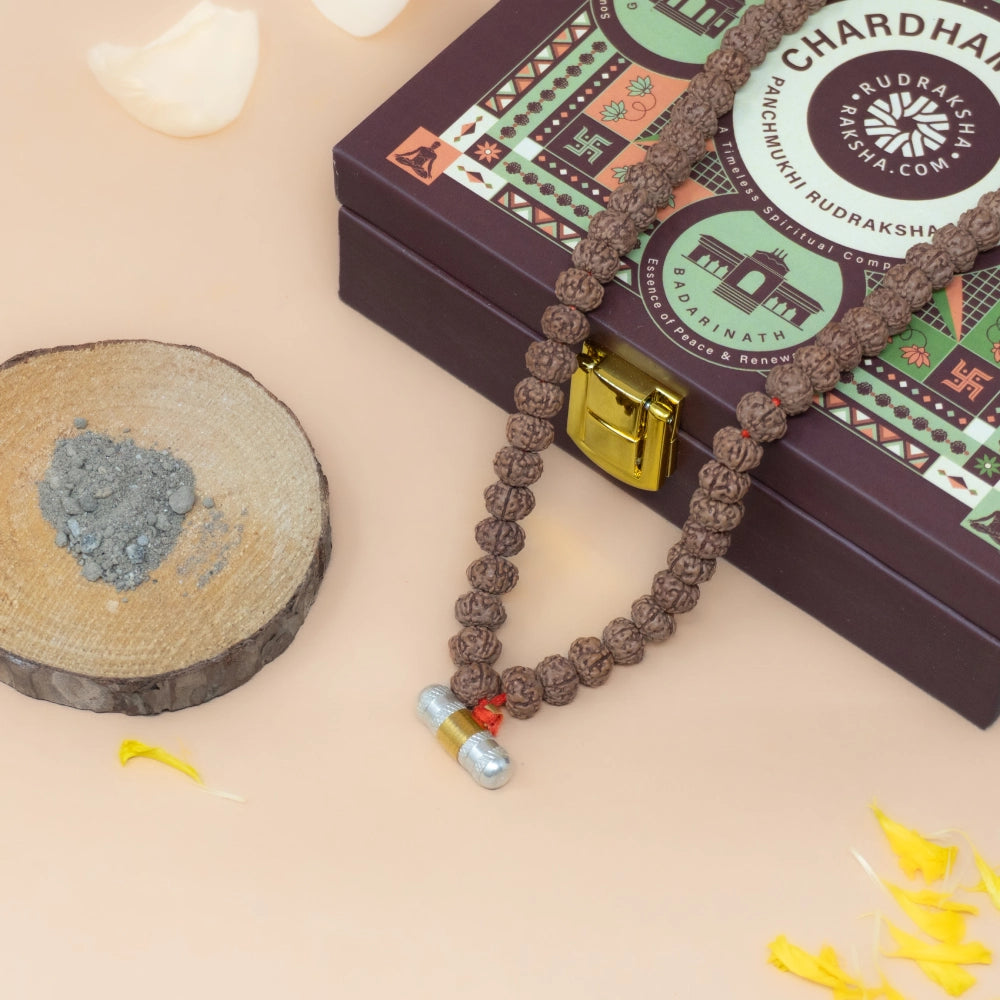
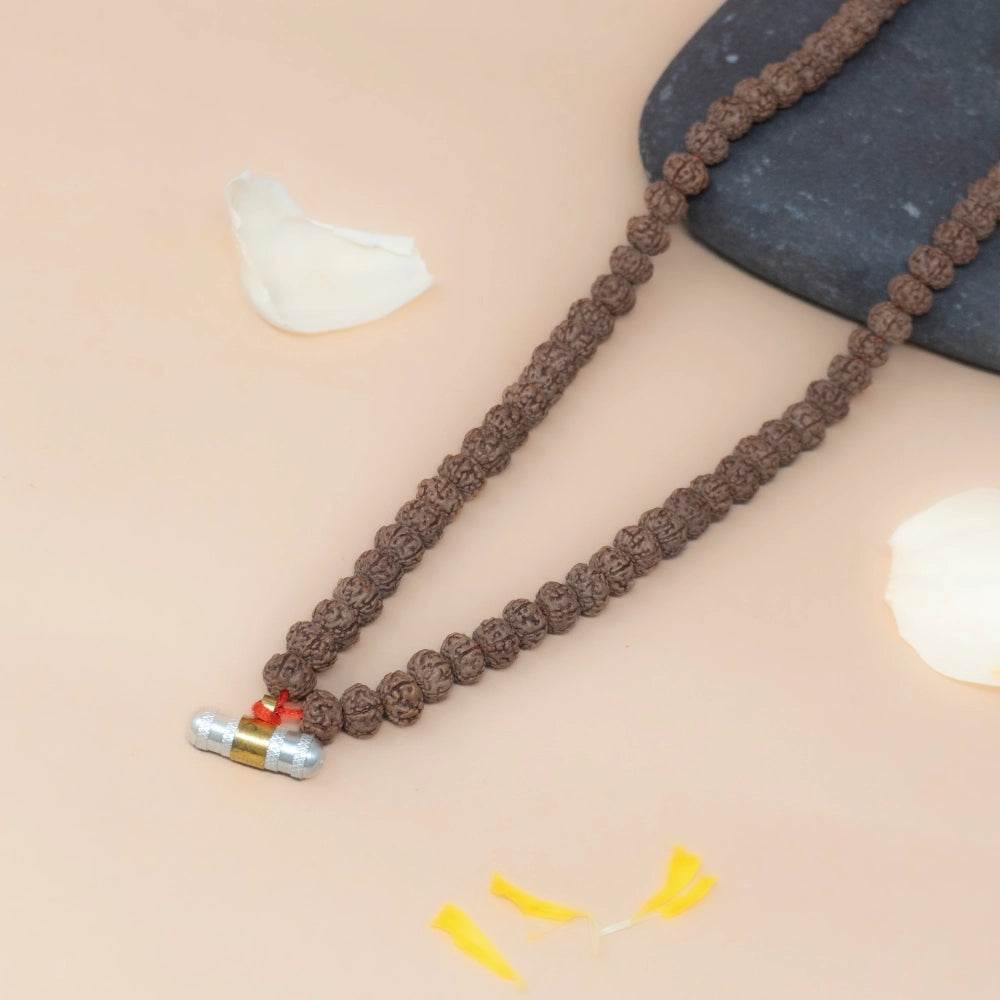
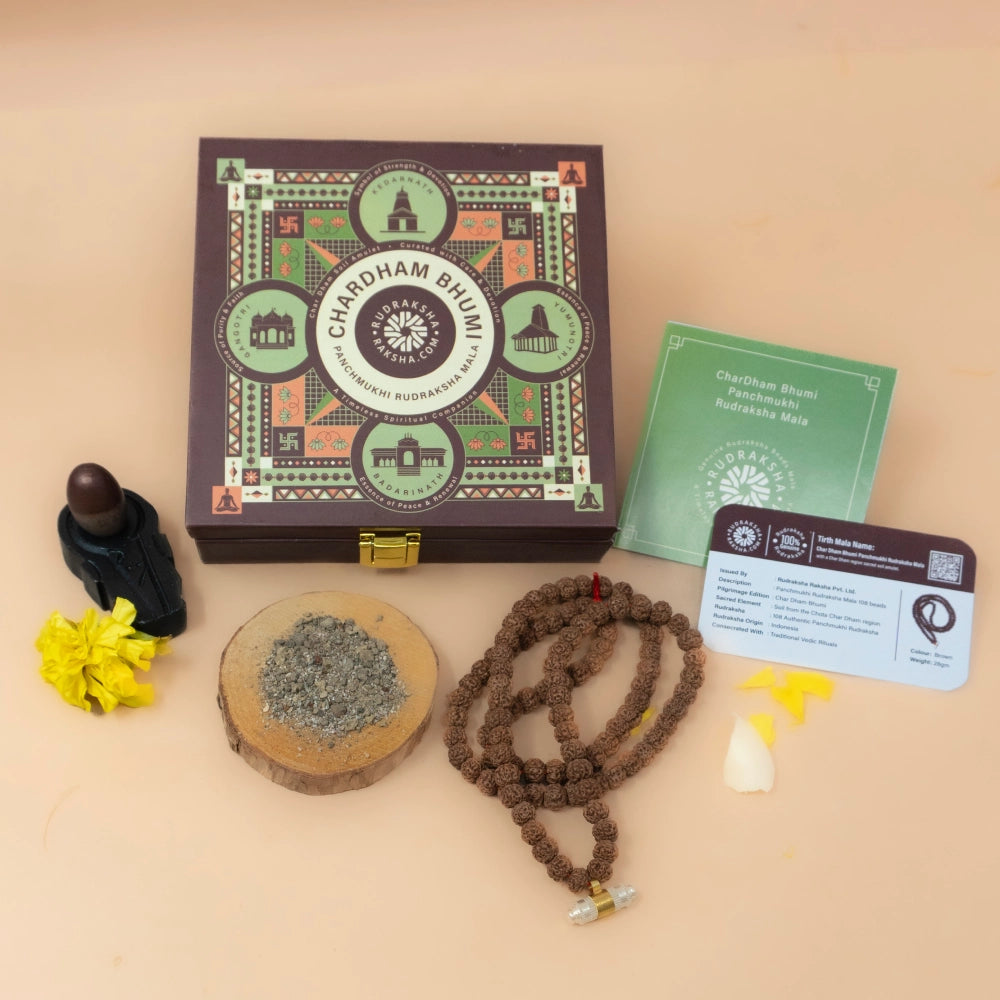
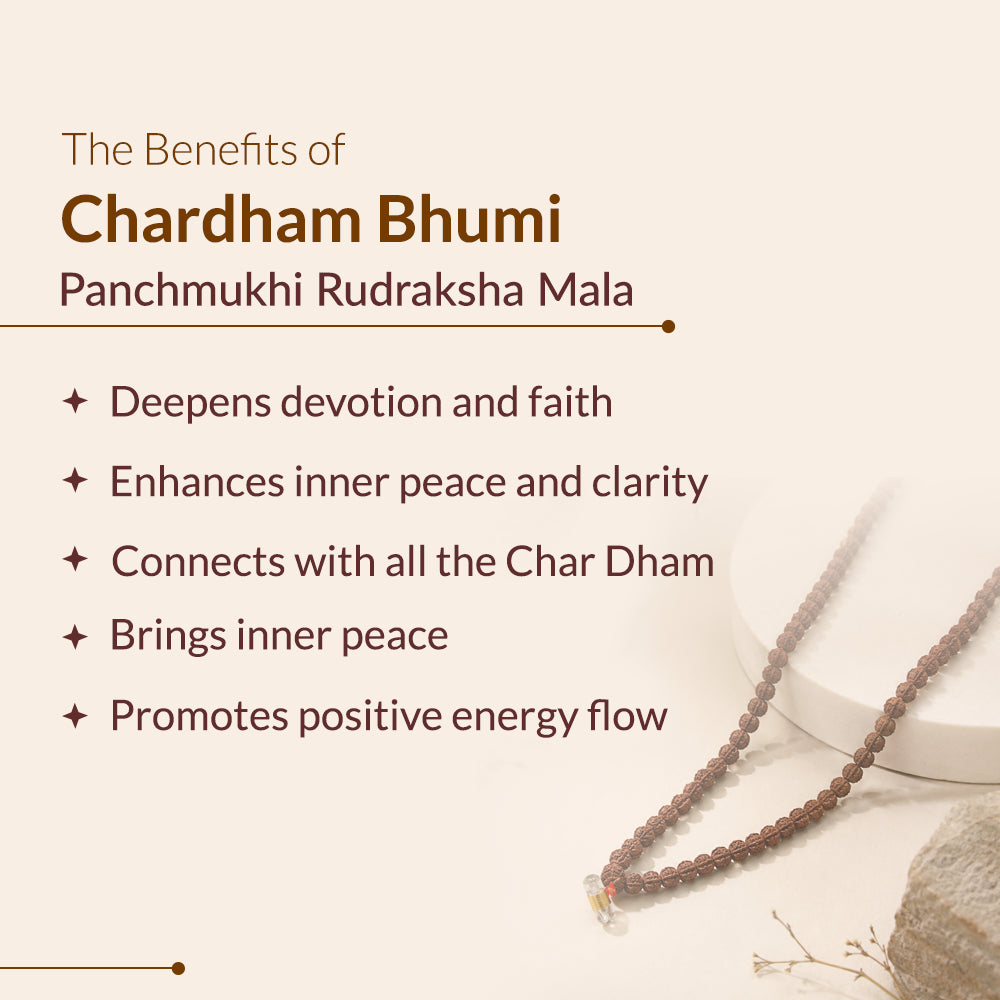
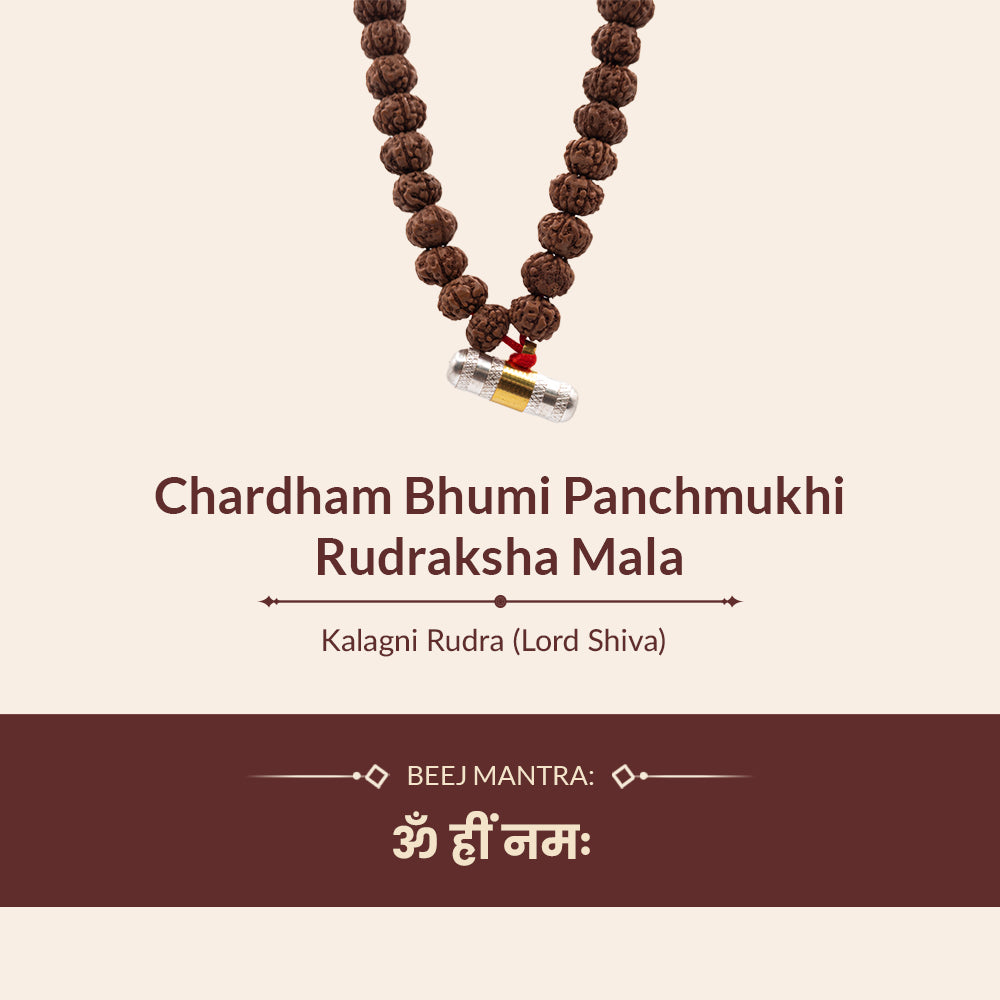
Chardham Bhumi Panchmukhi Rudraksha Mala
Origin :

Why Soil From the Chardham?
अस्त्युत्तरस्यां दिशि देवतात्मा हिमालयो नाम नगाधिराजः।
पूर्वापरौ तोयनिधी वगाह्य स्थितः पृथिव्या इव मानदण्डः॥
In the north stands the Himalaya, the king of mountains with a divine soul, reaching from one sea to the other like the measuring rod of the earth.
Kalidasa called this mountain devatatma, the one with a soul of the divine, and the four dhams sit right in its lap. This is the land where Ganga came down to earth through Shiva's hair, where Yamuna's waters are said to take away the fear of death, where Shiva forgave the Pandavas at Kedar, and where Vishnu still sits in penance at Badri.
And one thing said about this ground sets it apart. The path the Pandavas took to heaven, Swargarohini, rises from right here, past Kedar and Badri and Mana. This is believed to be the last stretch of earth a human walked before stepping into swarga, the ground where gods and sages keep coming and going even now.
गंगा, यमुना, केदार, बद्री, चारों की कृपा एक सूत्र में जड़ी
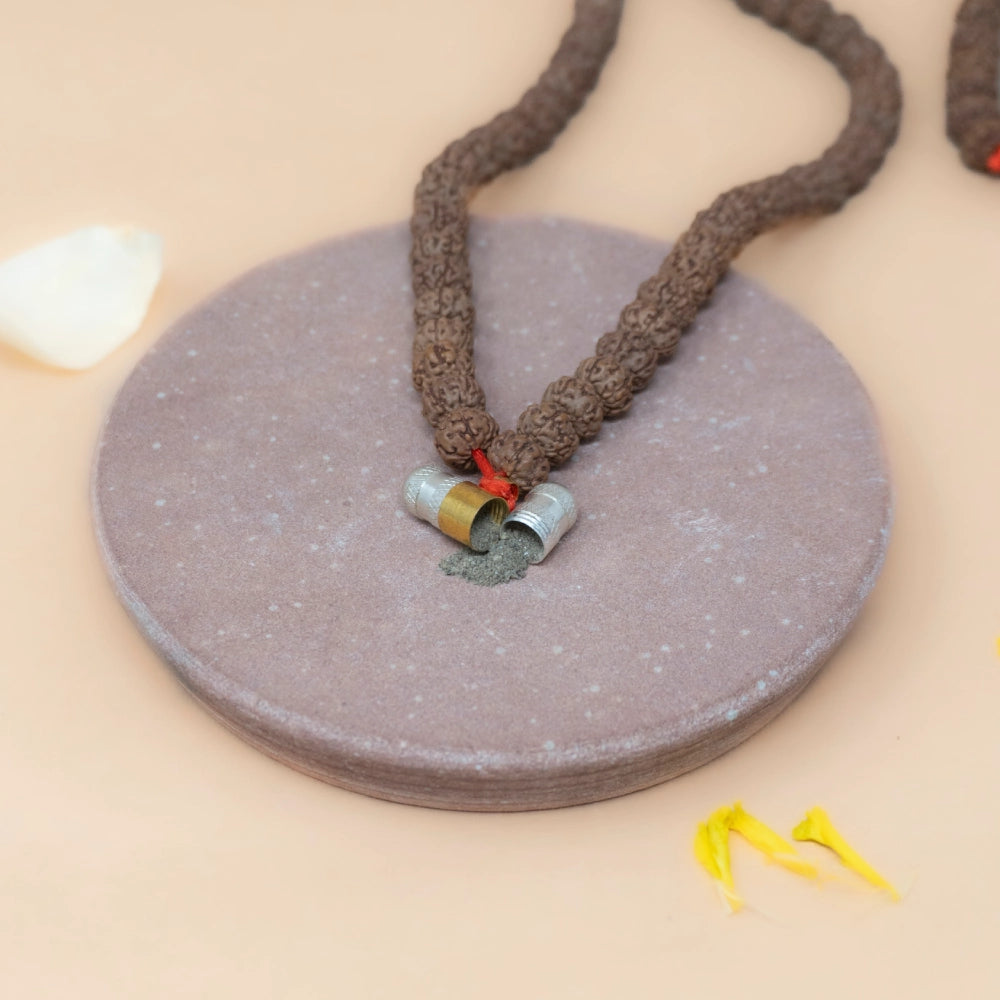
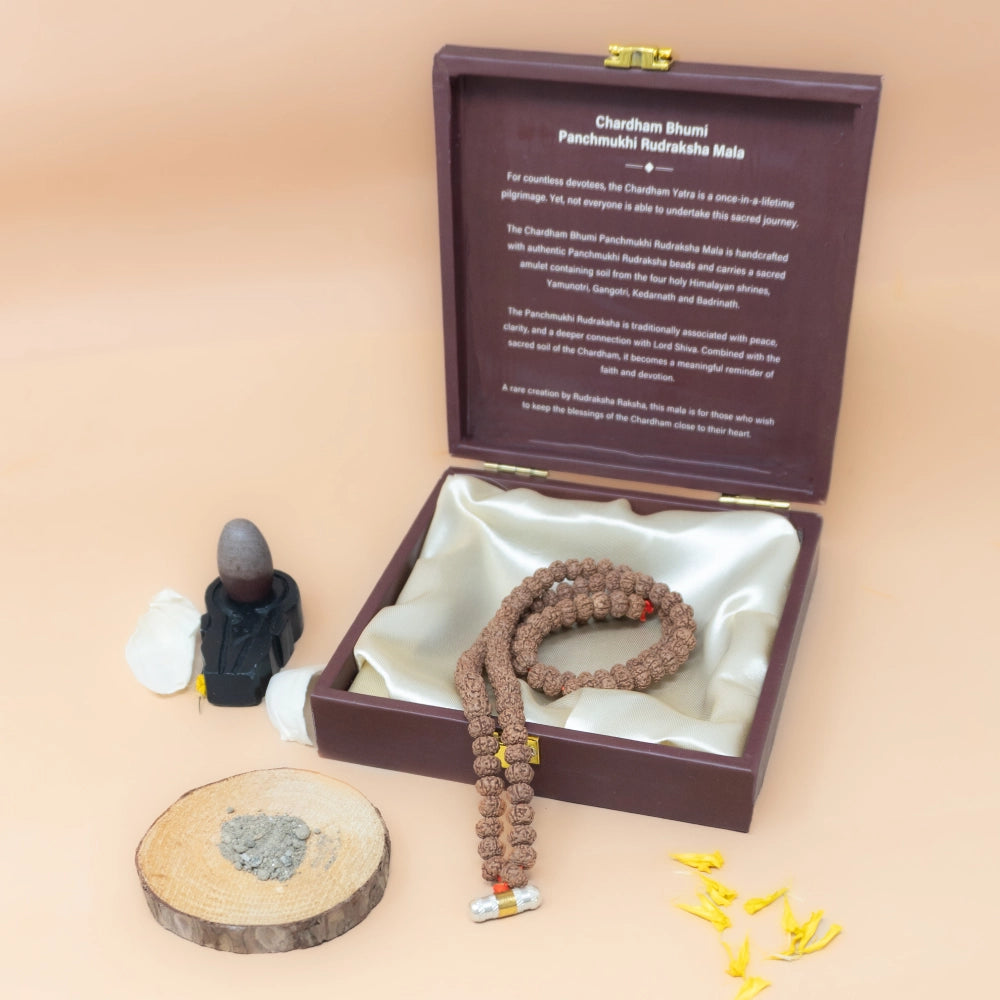
Not everyone can walk the whole Chardham in a single life. The roads climb high, and the season is short. So this mala brings the yatra to you instead. Each Panchmukhi bead carries the blessings of the five-faced form of Lord Shiva, and the amulet holds the soil of all four dhams, gathered from the land where the path to heaven itself begins.
So this is not just a mala. It is a piece of Devbhoomi where the gods still walk, worn close, so you carry the blessings of the Chardham wherever you go.
Choose options
रुद्राक्षं धारयेद्यस्तु स रुद्रो नात्र संशयः
"Whoever wears a Rudraksha becomes Rudra himself; there's no doubt about it."
रुद्राक्षधारी सततं वन्दनीयस्तथा नरैः
"One who wears the Rudraksha should always be respected by everyone."

7-Day Easy Returns
T&C Apply

Worldwide Shipping
Free Delivery in India
Mukhi Verified
Counted by hand
Energized & Activated
for Astrological Results
Hand-Picked Beads
Bead by bead, unbroken