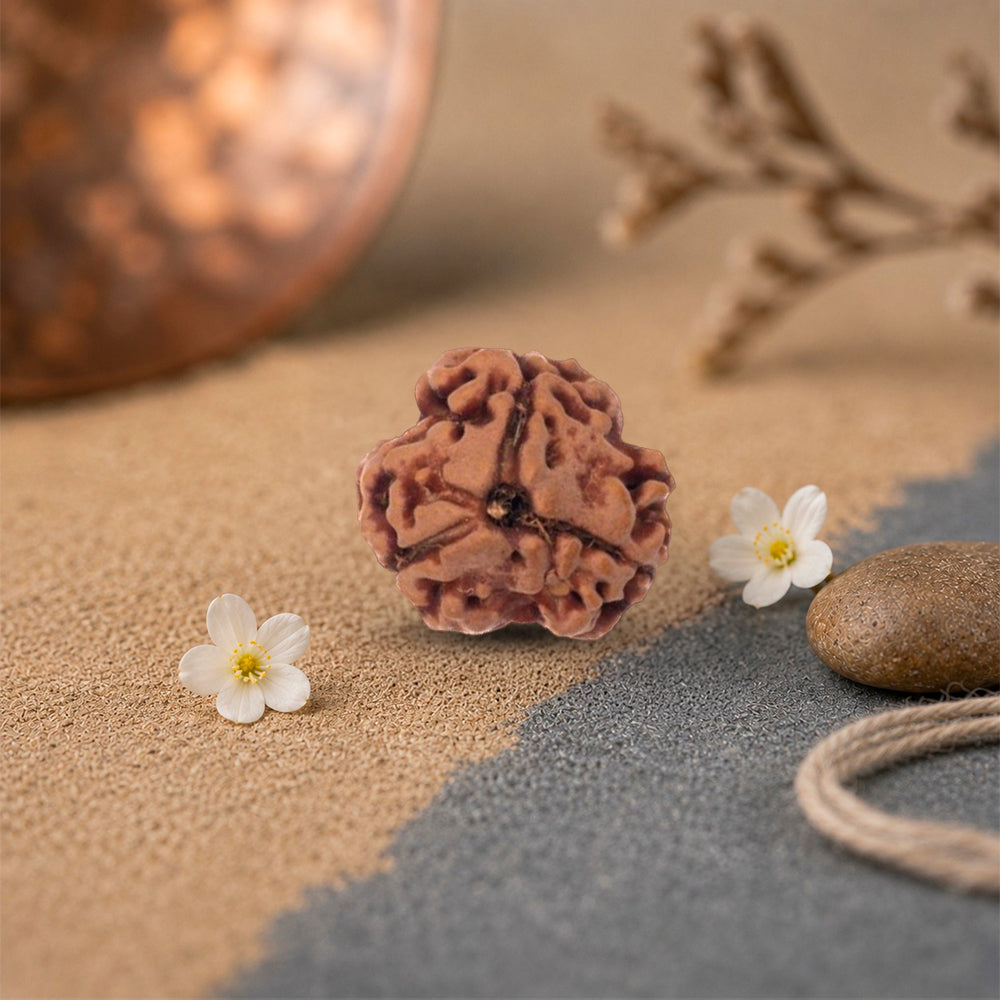
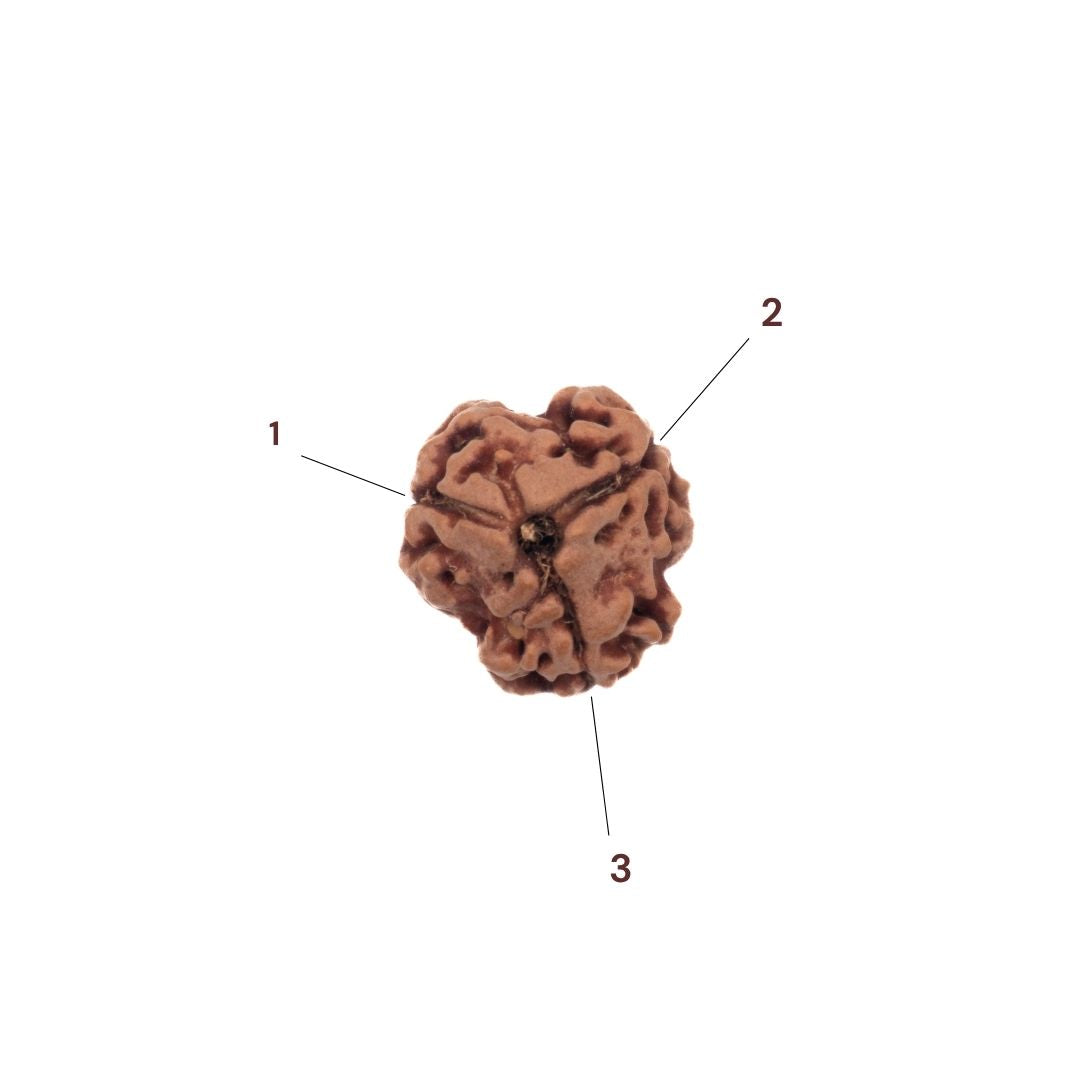
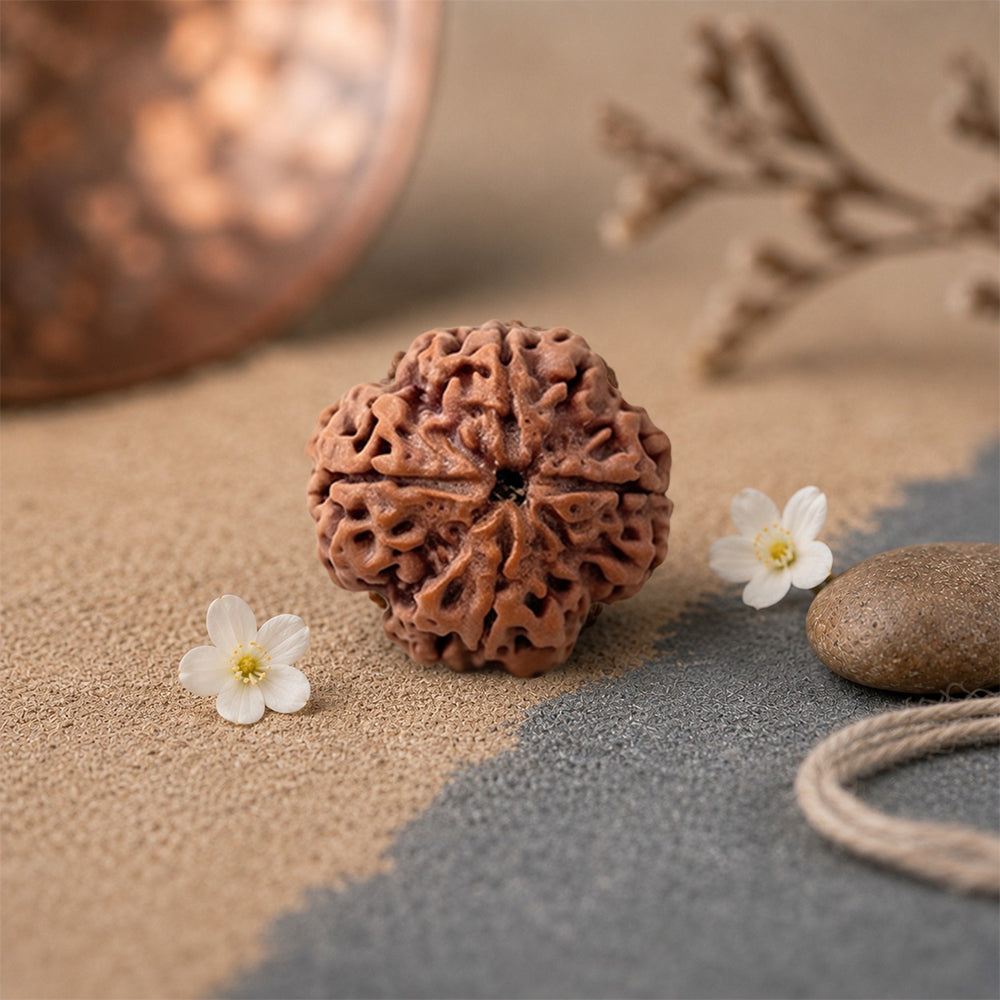
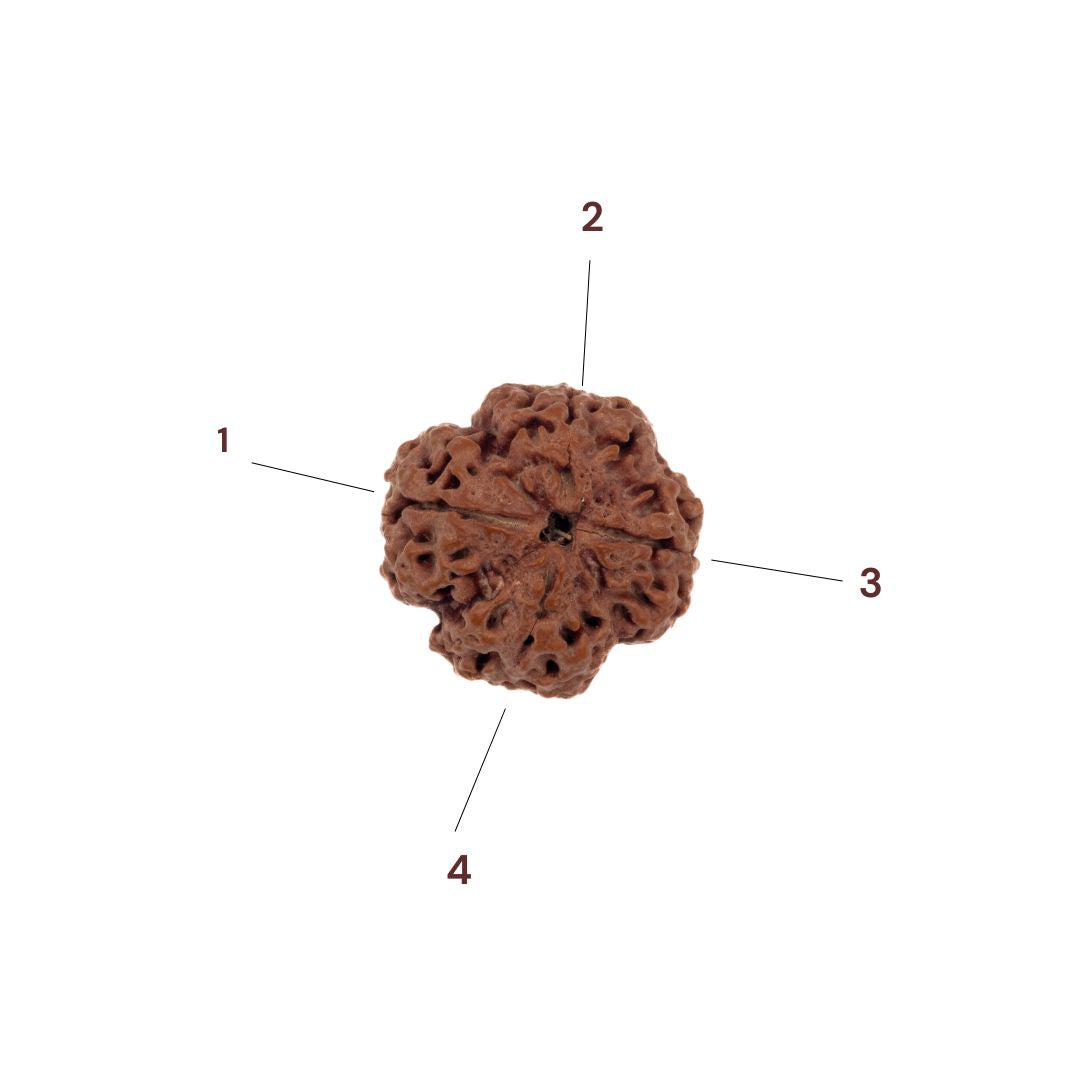
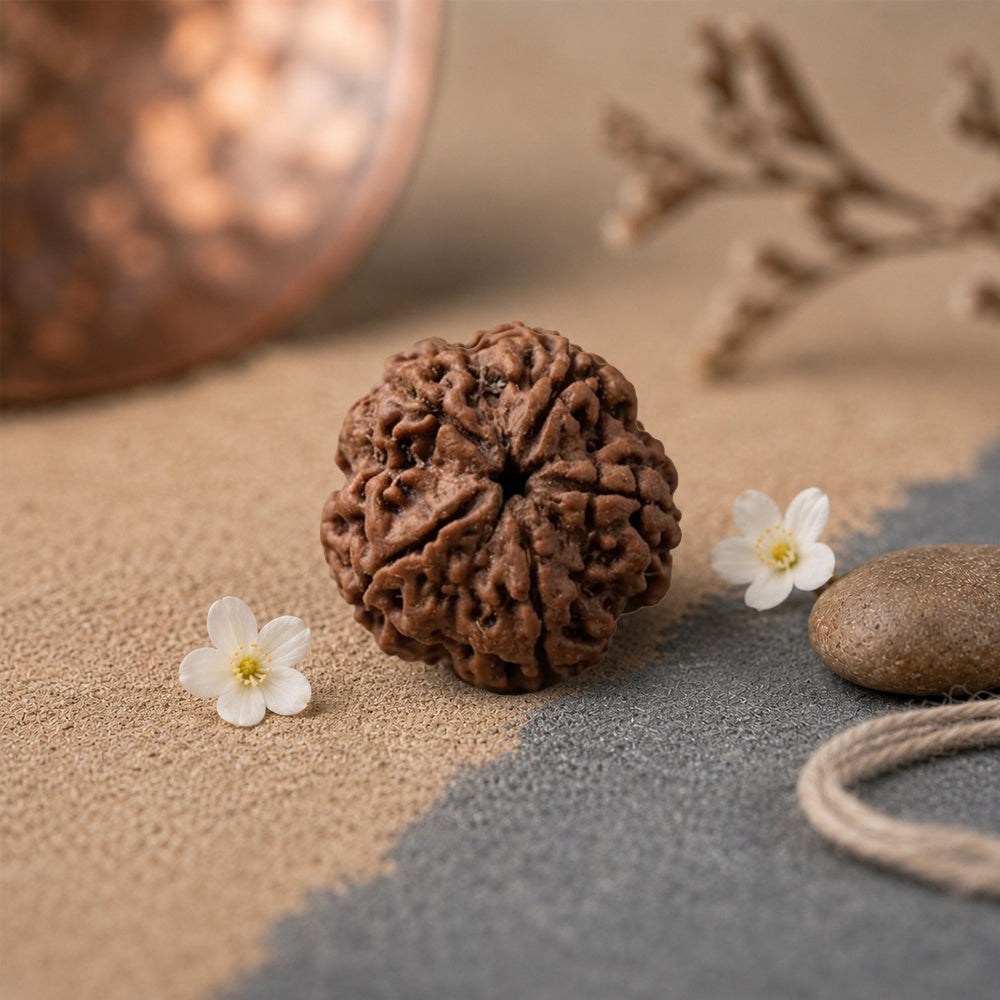
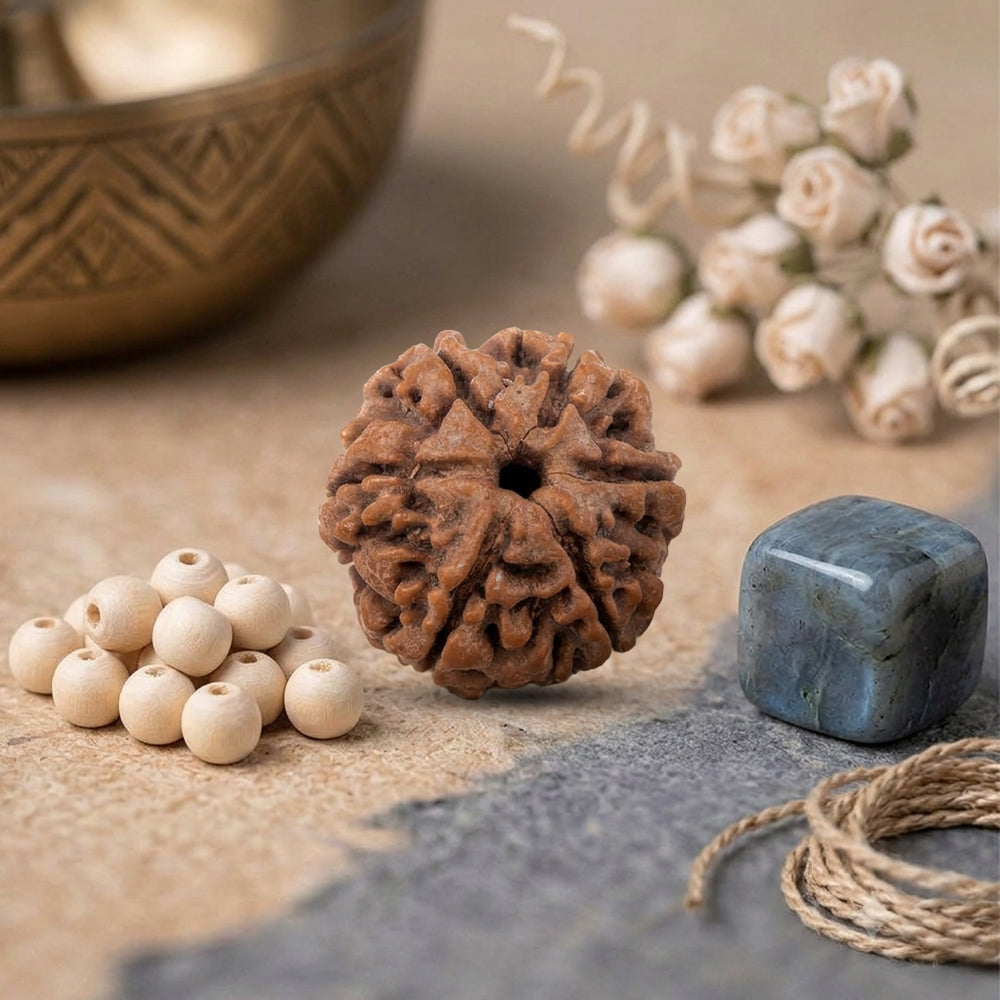
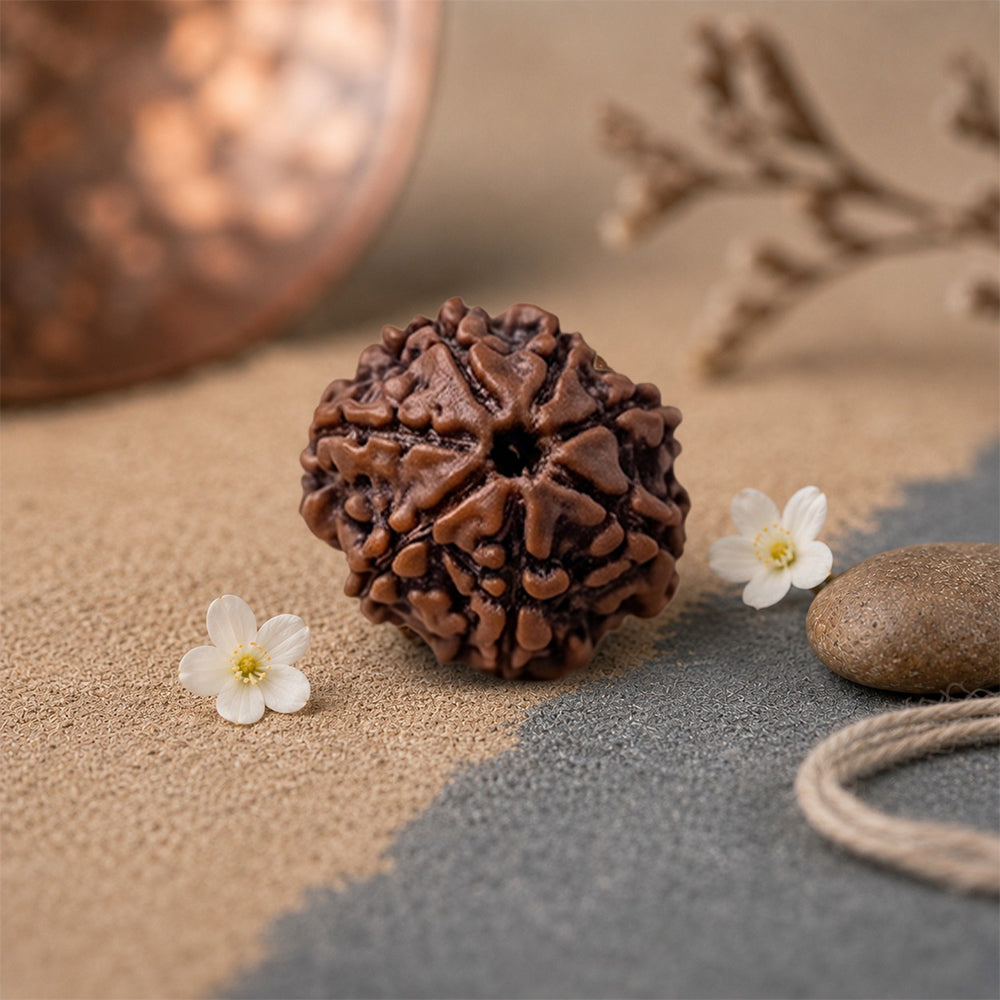
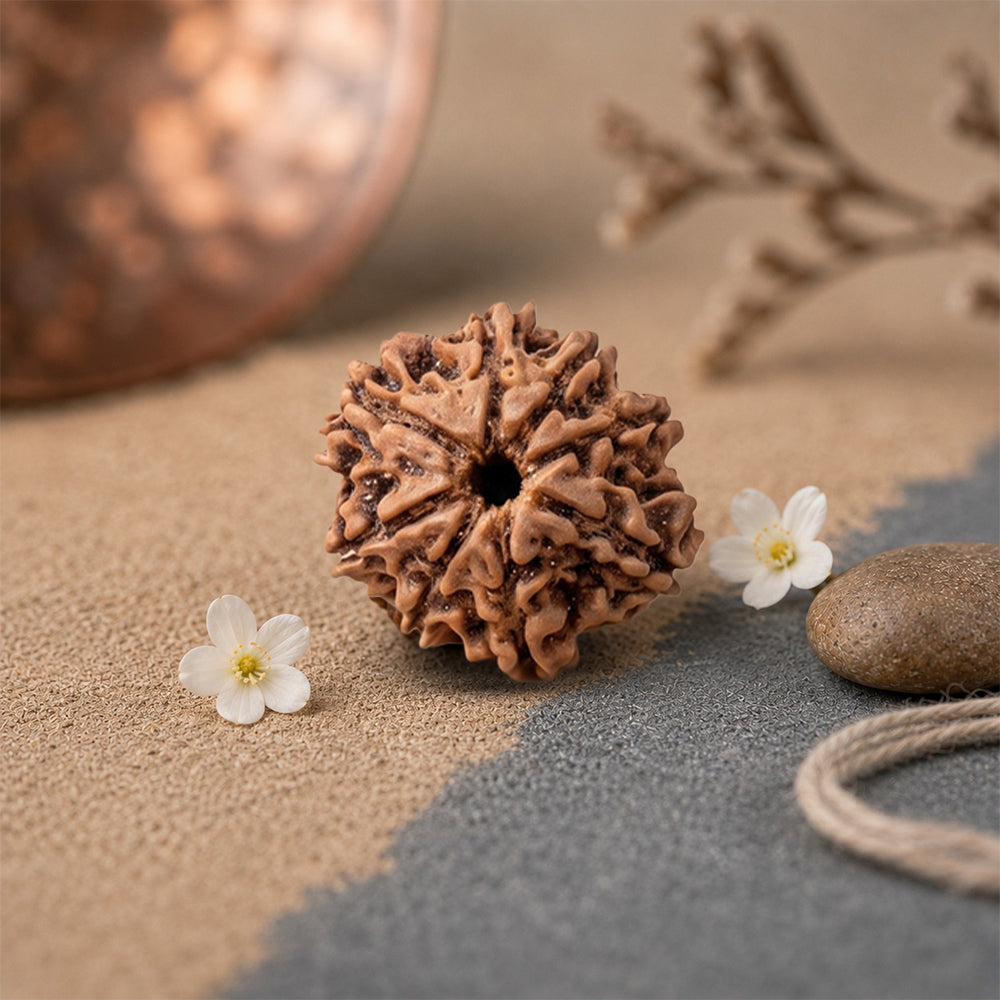
9 Mukhi Rudraksha
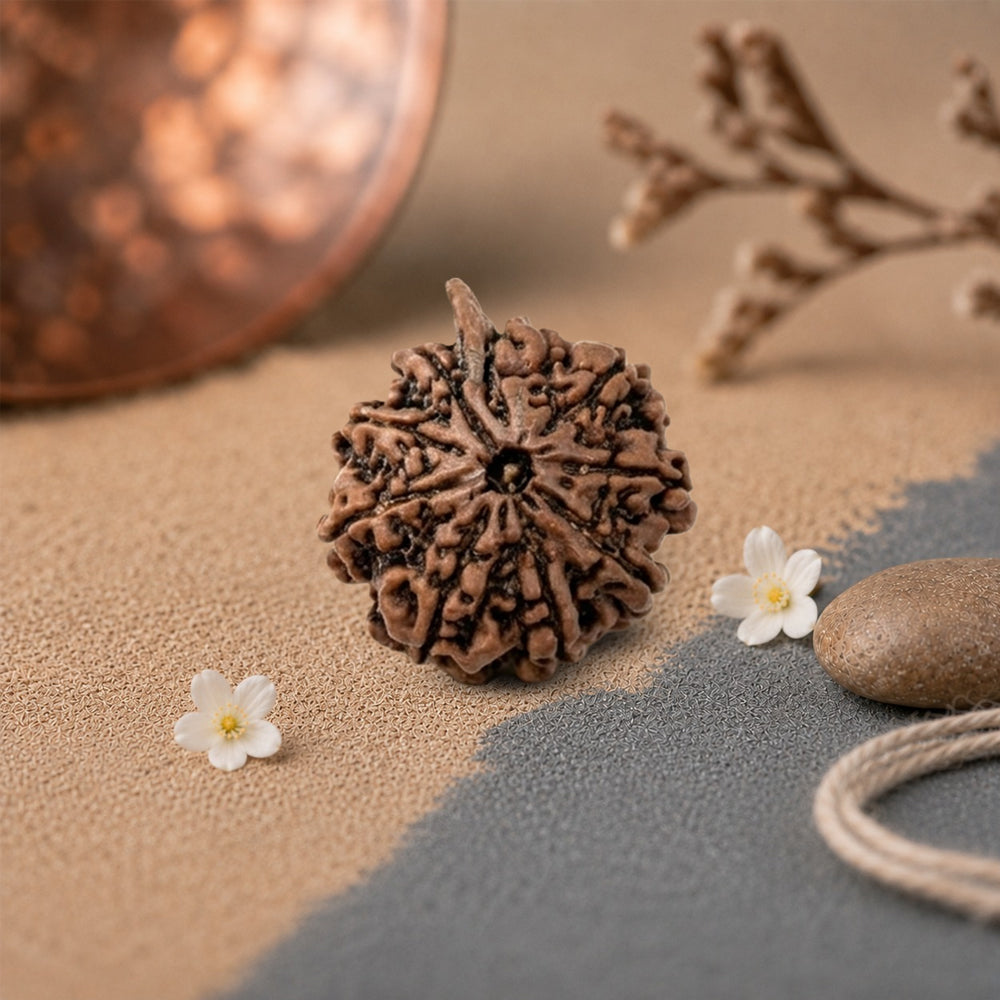
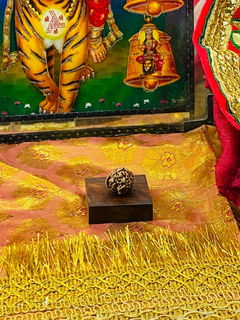
Nine Mukhi Rudraksha is a nine-faced rudraksha bead, embodying the nine forms of Goddess Durga known as the Nav Durga.
The scriptures say Maa Durga is actually here, in all nine of her forms, inside this one small fruit of the Elaeocarpus ganitrus tree.
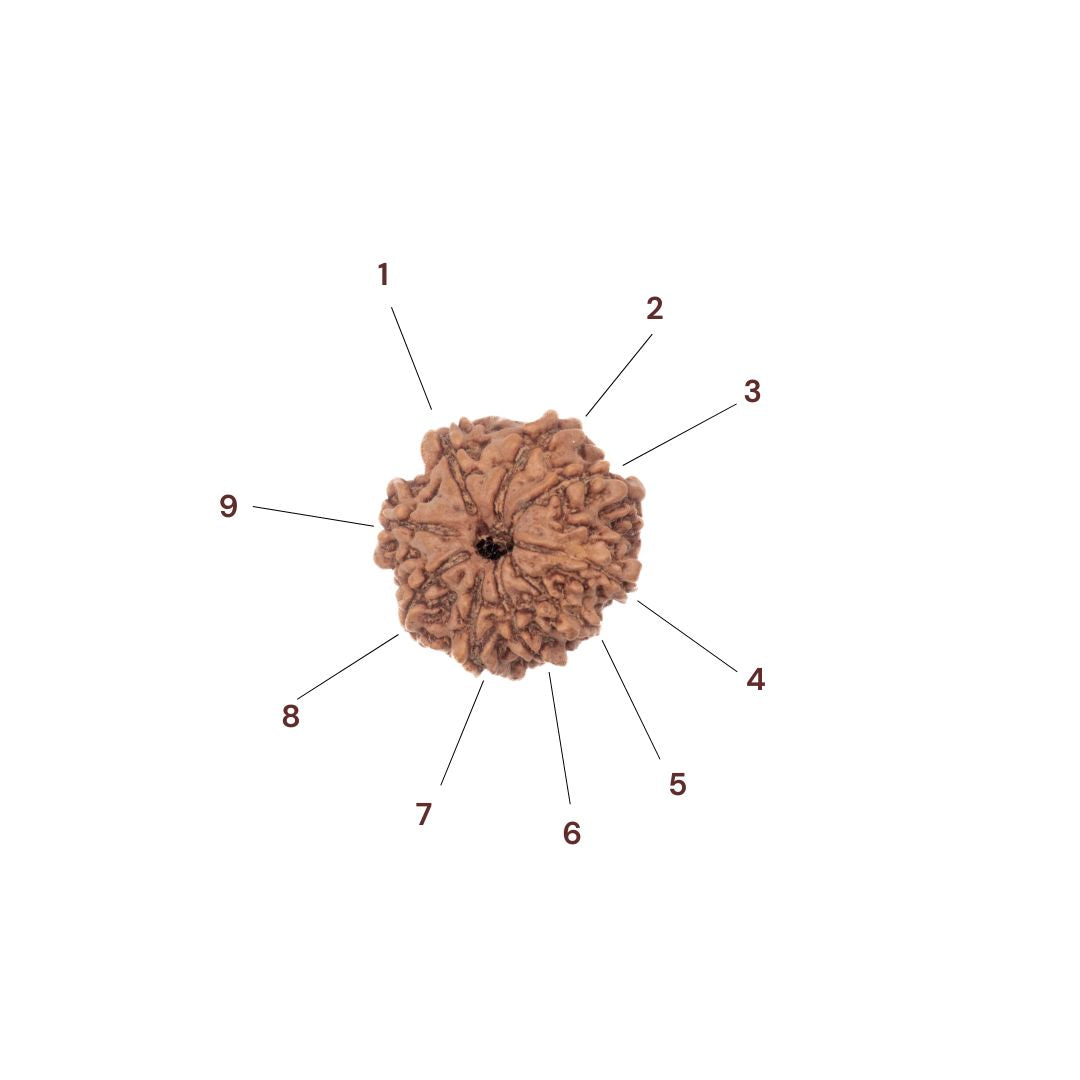
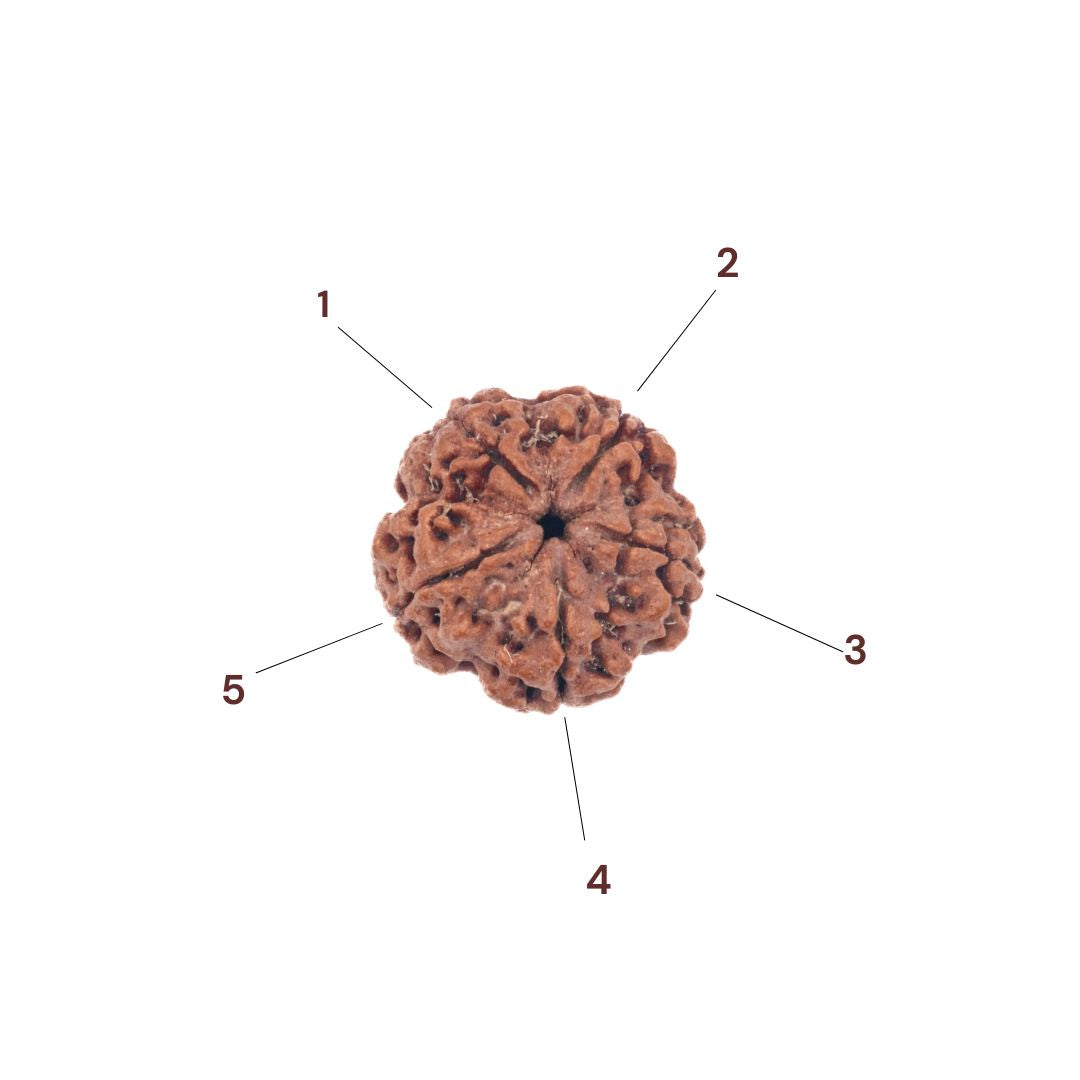
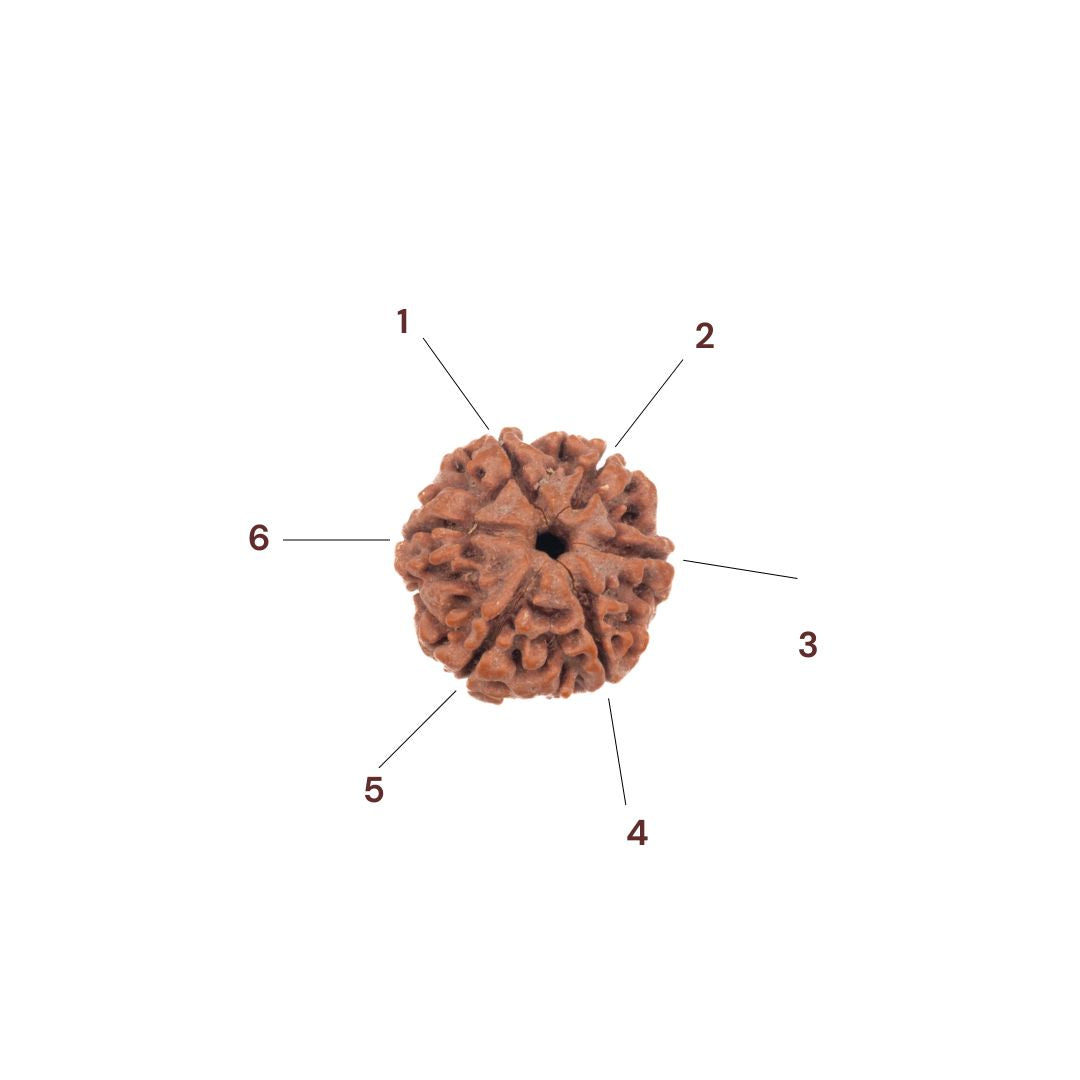
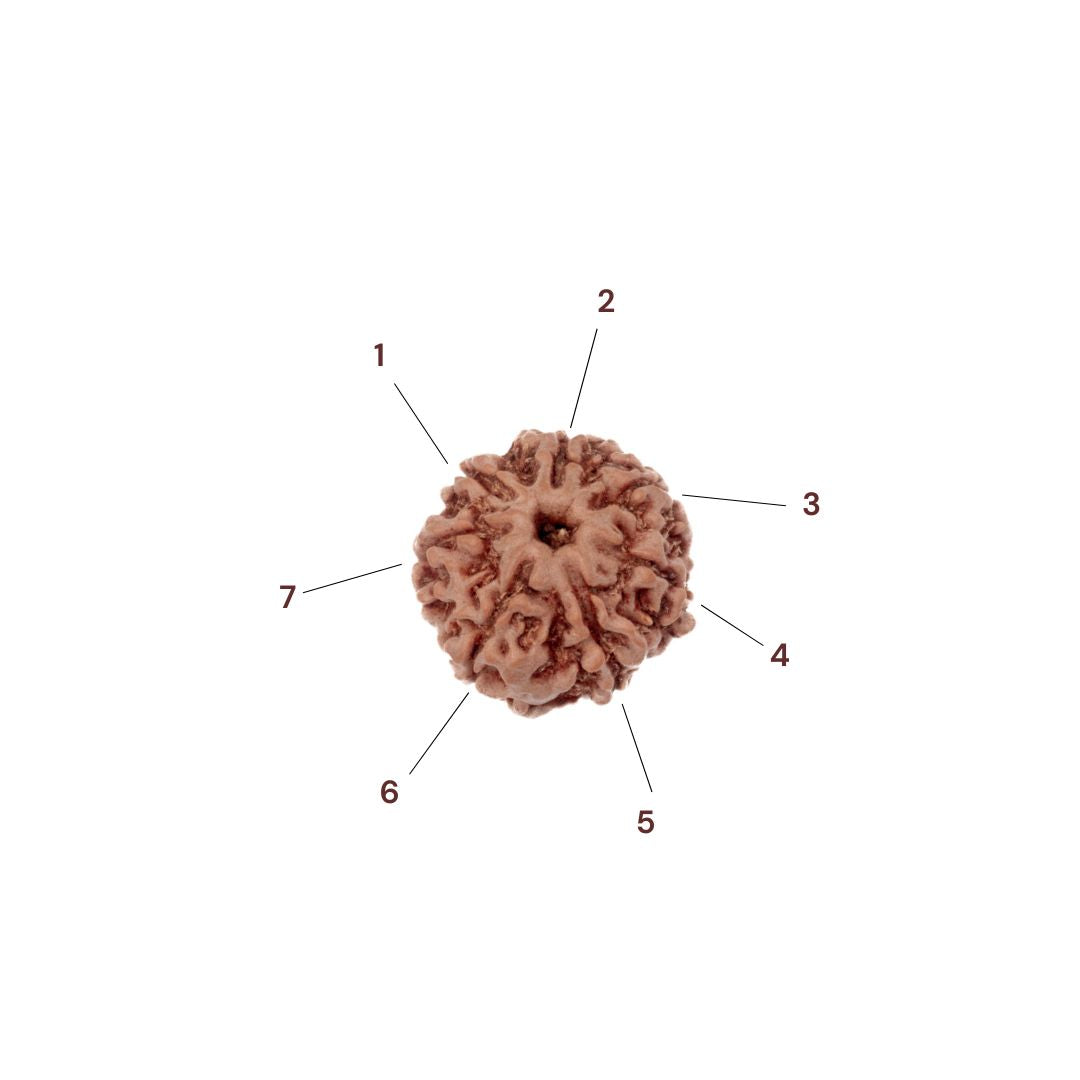
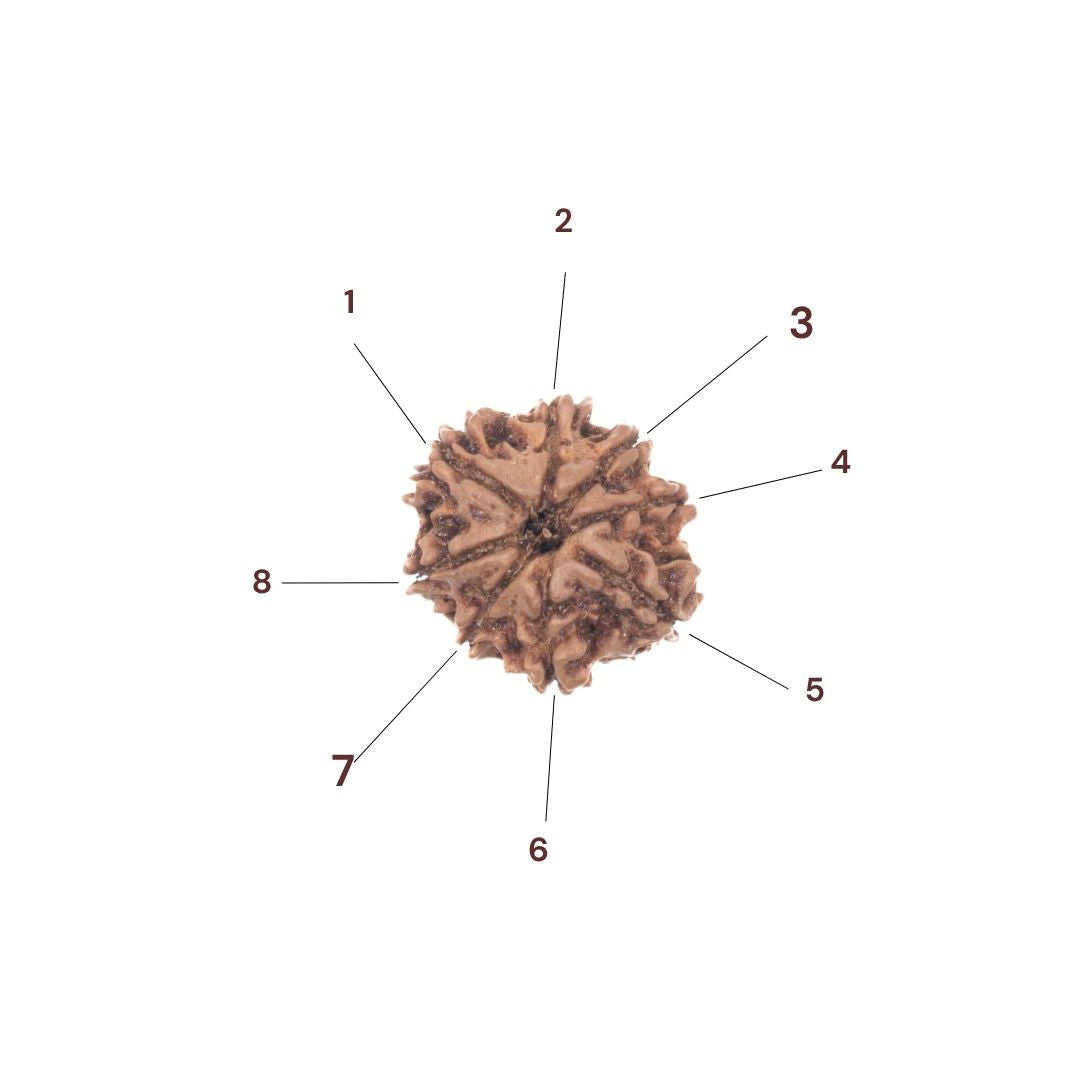
Nine natural grooves run from the crown of this bead down to its base. Nature made them, not any human hand. Each groove is considered one face of the Goddess. Nine faces, nine forms, one seed. That is exactly what Nav Mukhi means.
And nine is not just a number here. In Sanatan Dharma, nine belongs to the Goddess Durga the way six belongs to Kartikeya. The Nav Durga, the nine forms of Durga worshipped across the nine nights of Navratri, are all present together in this bead. Shailaputri, Brahmacharini, Chandraghanta, Kushmanda, Skandamata, Katyayani, Kalaratri, Mahagauri, Siddhidatri. Every single one of them.
The Shiva Mahapurana names this bead as Bhairava. The Devi Bhagavata Purana says the one who wears it is freed from all sins and receives both worldly fulfilment and liberation. The Rudraksha Jabala Upanishad says all nine Shaktis are pleased simply by wearing this Rudraksha. That is what makes the 9 Mukhi different from almost every other Rudraksha.
9 Mukhi Rudraksha: Origin
The 9 Mukhi Rudraksha grows on the Elaeocarpus ganitrus tree, the same tree that produces every variety of Rudraksha. It has everything to do with what formed inside it. Nine grooves on the surface, nine seed chambers within. The Shiva Mahapurana is clear on this: as many faces outside, as many chambers inside. That correspondence is the proof of genuineness, and it is also the map of the bead's identity. Nine chambers, nine Goddesses, one seed.
The tree grows across the Himalayan belt and parts of Southeast Asia. Nepal, India, and Indonesia are the three living sources today. Nepal produces the most valued beads, dense, heavy, and deeply grooved, grown at high altitude in the same mountain geography that the Puranas call Shiva's own land.
In India, Uttarakhand, Assam, and Sikkim are the primary growing regions. Indonesian beads from the forests of Java are also genuine but grow at lower altitudes, which shows in their size and the depth of their grooves.
The Number 9: Nine Forms of Durga, Nine Kinds of Power
The nine faces of this bead correspond to the nine forms of Goddess Durga worshipped across the nine nights of Navratri. These are not simply different names for the same deity. Each form descended with a different quality, a different temperament, a different purpose.
- Shailaputri: Daughter of the Himalayas, born of the mountain itself. She is the beginning, the root, the unshakeable ground beneath everything.
- Brahmacharini: The one who walked the path of tapasya barefoot for thousands of years to reach Shiva. She is devotion that does not bargain, discipline that does not waver.
- Chandraghanta: She who wears the half-moon on her crown and whose very bell sound destroys evil. She is the fearlessness that comes from being established in something larger than fear.
- Kushmanda: The one whose smile created the universe. She is creative force at its most fundamental, the energy from which everything began.
- Skandamata: Mother of Kartikeya, the war god. She is fierce maternal protection, the love that will not stand aside when something threatens what it cares for.
- Katyayani: Born from the collective rage of the gods when nothing else could stop Mahishasura. She is righteous anger, the power that rises when compassion has been exhausted.
- Kalaratri: The darkest form, the most terrifying. She destroys ignorance the way night is destroyed by light, completely, without negotiation.
- Mahagauri: Radiant white, the form Parvati took after years of severe penance left her dark and the Ganga washed her clean. She is purification, the possibility of starting again.
- Siddhidatri: The bestower of all siddhis. She gives to the one who has completed the journey through all the other forms.
Wearing this bead during Navratri carries the same merit as fasting and worshipping through all nine nights.
What the Scriptures Say About 9 Mukhi Rudraksha
The Nine Mukhi Rudraksha is not just spiritually significant by tradition or word of mouth. It is backed by four major scriptures, each one saying something specific about this bead.
Devi Bhagwat Puran
नववक्त्रो भैरवस्तु धारयेद्वामबहुके, भुक्तिमुक्ति प्रदः प्रोक्तो मम तुल्यबलो भवेत् |
भ्रूणहत्यासहस्राणि ब्रह्महत्या शतानि च, सघः प्रलयमायांति नववक्त्रस्य धारणात् ||
Navavaktro bhairavstu dharayedvamabahuke, bhuktimukti pradah prokto mama tulyabalo bhavet |
Bhrunhatya sahasrani brahmahatya shatani cha, saghah pralayamaayanti navavaktrasya dharanaat ||
The nine-faced Rudraksha is the form of Bhairava. It should be worn on the left arm. The one who wears it receives both worldly enjoyment and liberation, and their strength becomes equal to mine.
नववक्त्रस्तु रुद्राक्षो यमदेव उदाहृतः|
तद्धारणादिमे प्रीता भवेयुः सत्यवादिनः ||
Navavaktras tu rudraksho yamadeva udahritah |
Taddharanad ime preeta bhaveyuh satyavadinah ||
The nine-faced Rudraksha is considered equal to Yamadeva himself. And the one who wears it no longer carries any fear of Yama.
Shiv Mahapuran
भैरवो नववक्त्रश्च कपिलश्च मुनिः स्मृतः | दुर्गा वा तदधिष्ठात्री नवरूप महेश्वरी ||
तं धारयेद्वामहस्ते रुद्राक्षं भक्तितत्परः | सर्वेश्वरो भवेन्नूनं मम तुल्यो न संशयः ||
Bhairavo navavaktrashcha kapilashcha munih smritah | Durga va tadadhishthatri navarupa maheshvari ||
Tam dharayedvamahaste rudraksham bhaktitatparah | Sarveshvaro bhavennoonam mama tulyo na samshayah ||
The nine-faced Rudraksha is considered the form of Bhairava and Kapila Muni. And the presiding deity of this bead is Goddess Durga, Maheshvari herself, who manifests in nine forms.
Shiva says it himself: the person who wears the nine-faced Rudraksha on the left hand with true devotion becomes equal to me. There is no doubt in this.

Nine Mukhi Rudraksha: Ruling Deity, Ruling Planet, Associated Chakra and More
The presiding deity of the 9 Mukhi Rudraksha is Goddess Durga in her nine forms, the Nav Durga. The scriptures also name Bhairava as the form of the bead itself, with Yamadeva and Sage Kapila connected to it. Its ruling planet is Ketu, and the chakra is the Sahasrara, the crown chakra that holds our connection to the divine.
Other Names: Nav Mukhi Rudraksha, Nau Mukhi Rudraksha, Navadurga Rudraksha, Nine-Faced Rudraksha
Ruling Deity: Goddess Durga in nine forms (Nav Durga); also Bhairava and Yamadeva
Ruling Planet: Ketu (South Lunar Node)
Beej Mantra: ॐ ह्रीं हूं नमः
Durga Mantra: ॐ दुर्गायै नमः
Associated Chakra: Sahasrara (Crown Chakra)
Favorable Day: Monday, Tuesday; Navratri is the most powerful time
Worn on: Left arm or left wrist, as prescribed in the Shiva Mahapurana
Origin: Nepal, India (Uttarakhand, Assam, Sikkim), Indonesia (Java)
Benefits of Wearing 9 Mukhi Rudraksha
The Devi Bhagavata Purana promises something rare. It does not offer liberation alone or worldly happiness alone. It offers both, from the same bead. That is exactly what the Divine Mother is. She does not separate life into spiritual and worldly, and her Rudraksha does not either.
Spiritual Benefits
- Burns away accumulated sins and karma, the way Bhairava works
- Grants both worldly fulfilment and liberation
Pleases all nine forms of the Goddess at once, like daily Navratri worship - Removes the fear of death, since Bhairava and Yamraj both reside in this bead
- Awakens the Sahasrara chakra.
Emotional Benefits
- Dissolves fear at its root
- Builds inner shakti, making the wearer more energised
- Especially steadying for women carrying the weight of work and family
- Eases depression and aimlessness
- Washes away old grief and guilt
Physical Benefits
- Associated with the brain, nervous system, lungs, skin, and reproductive health
- Traditionally linked to recovery from fevers, eye trouble, and bowel issues
- Always worn alongside proper medical care, never in place of it
Who Should Wear 9 Mukhi Rudraksha
The Shiva Mahapurana makes no distinction of gender, caste, or age for Rudraksha. But the 9 Mukhi has its own particularly urgent callings.
- Devotees of Shakti, Durga, or Kali: This is the primary bead for Shakti upasana
- Women, in all stages of life: Named specifically in traditional sources as the most beneficial Rudraksha for women
- Those with malefic Ketu / Ketu Mahadasha: Ketu is the ruling planet of this Rudraksha
- Anyone living with irrational fear or phobia: Nav Durga + Bhairava + Yamraj together address fear at every level
- Those experiencing depression or loss of purpose: Reconnects the Sahasrara chakra and restores the sense of divine direction
- Meditators and serious sadhaks: Sahasrara activation supports the deepest states of meditation and self-inquiry
- Those observing Navratri or worshipping Nav Durga: Wearing this bead during Navratri equals the merit of the full nine-night sadhana
- Those with Kaal Sarp Dosha: Addresses the shadow planet and its effects on the life path
- Those carrying old grief, guilt, or unresolved karma: Mahagauri's form within the bead is specifically about purification and fresh starts
- Pregnant women or those with reproductive concerns: Traditional sources mention this bead in connection with these specific conditions
- Those beginning new endeavours without confidence: The Goddess's combined energy of creation (Kushmanda) and power (Katyayani) applies directly
How to Wear 9 Mukhi Rudraksha?
The Shiva Mahapurana is clear that a Rudraksha worn without its mantra does not work the way it should. The mantra is what connects the bead's energy to the person wearing it. Without it, the bead is just a seed. With it, the Goddess is present.
Step 1: Shuddhi (Purification):
Wash the bead in Gangajal or clean water. Raw cow's milk works too. Let it dry on its own. A light touch of sandalwood paste or clean oil keeps the surface healthy over time. Never use soap, shampoo, or perfume on it.
Step 2: Sankalp (Intention)
Hold the bead in both hands, close your eyes, and say what you are asking for, simply and honestly. The Goddess does not need a long ceremony. She responds to sincerity.
Step 3: Mantra
Chant the beej mantra 108 times:
ॐ ह्रीं हूं नमः
Then chant the Durga mantra 108 times:
ॐ दुर्गायै नमः
Difference Between Nepali and Indonesian 9 Mukhi Rudraksha
Both come from the same tree, but the land they grow in shapes them differently. The 9 Mukhi has an oval form in both varieties, but the resemblance ends there.
Nepali 9 Mukhi beads grow in the high, cool Himalayan belt. They are larger, heavier, and their nine mukhi lines run deep and clear, easy to count with the naked eye. The surface has a natural roughness to it. Because the energy is stronger and more concentrated, the effects are usually felt sooner. This is the bead serious practitioners and Devi upasaks have always preferred.
Indonesian 9 Mukhi beads, grown in the warm forests of Java, are smaller and smoother, with fine thread-like mukhi lines that often need a closer look to count. They are also genuine, and they carry the same divine power. The energy is gentler and takes a little longer to settle in, which suits daily wear and steady, long-term practice.
Neither one is fake, and neither one is lesser. The inner structure is the same in both: nine lines outside and nine chambers within. For focused Durga sadhana, Nepali is the traditional choice. For light, everyday wear, Indonesian works beautifully.
9 Mukhi Rudraksha Dos & Don’ts
Most Rudraksha rules are common to every bead. But one rule is specific to the 9 Mukhi, and it matters: both the Shiva Mahapurana and the Devi Bhagavata Purana say to wear it on the left arm. The left is the receiving side, the side of Shakti. This is the opposite of the 6 Mukhi, which goes on the right.
Dos
- Chant ॐ ह्रीं हूं नमः before wearing it each day
- Wear it on the left arm or left wrist, as the scriptures say
- Keep it touching the skin directly
- Energise it freshly during Navratri, its most powerful time
- Keep it in your puja place when you take it off
- Change the thread every six months
- Remove it before a funeral or cremation ground
Don'ts
- Never wear it without the mantra
- Do not share your bead with anyone else
- Do not let soap, shampoo, or perfume touch it
- Do not wear a bead that has cracked or broken
- Do not leave it lying in bags or drawers
- Avoid tamasic food while doing Durga sadhana
- Do not wear it over thick clothing, away from the skin
Origin
9 Mukhi Rudraksha: Origin
The 9 Mukhi Rudraksha grows on the Elaeocarpus ganitrus tree, the same tree that produces every variety of Rudraksha. It has everything to do with what formed inside it. Nine grooves on the surface, nine seed chambers within. The Shiva Mahapurana is clear on this: as many faces outside, as many chambers inside. That correspondence is the proof of genuineness, and it is also the map of the bead's identity. Nine chambers, nine Goddesses, one seed.
The tree grows across the Himalayan belt and parts of Southeast Asia. Nepal, India, and Indonesia are the three living sources today. Nepal produces the most valued beads, dense, heavy, and deeply grooved, grown at high altitude in the same mountain geography that the Puranas call Shiva's own land.
In India, Uttarakhand, Assam, and Sikkim are the primary growing regions. Indonesian beads from the forests of Java are also genuine but grow at lower altitudes, which shows in their size and the depth of their grooves.
Spiritual Significance
The Number 9: Nine Forms of Durga, Nine Kinds of Power
The nine faces of this bead correspond to the nine forms of Goddess Durga worshipped across the nine nights of Navratri. These are not simply different names for the same deity. Each form descended with a different quality, a different temperament, a different purpose.
- Shailaputri: Daughter of the Himalayas, born of the mountain itself. She is the beginning, the root, the unshakeable ground beneath everything.
- Brahmacharini: The one who walked the path of tapasya barefoot for thousands of years to reach Shiva. She is devotion that does not bargain, discipline that does not waver.
- Chandraghanta: She who wears the half-moon on her crown and whose very bell sound destroys evil. She is the fearlessness that comes from being established in something larger than fear.
- Kushmanda: The one whose smile created the universe. She is creative force at its most fundamental, the energy from which everything began.
- Skandamata: Mother of Kartikeya, the war god. She is fierce maternal protection, the love that will not stand aside when something threatens what it cares for.
- Katyayani: Born from the collective rage of the gods when nothing else could stop Mahishasura. She is righteous anger, the power that rises when compassion has been exhausted.
- Kalaratri: The darkest form, the most terrifying. She destroys ignorance the way night is destroyed by light, completely, without negotiation.
- Mahagauri: Radiant white, the form Parvati took after years of severe penance left her dark and the Ganga washed her clean. She is purification, the possibility of starting again.
- Siddhidatri: The bestower of all siddhis. She gives to the one who has completed the journey through all the other forms.
Wearing this bead during Navratri carries the same merit as fasting and worshipping through all nine nights.
What the Scriptures Say About 9 Mukhi Rudraksha
The Nine Mukhi Rudraksha is not just spiritually significant by tradition or word of mouth. It is backed by four major scriptures, each one saying something specific about this bead.
Devi Bhagwat Puran
नववक्त्रो भैरवस्तु धारयेद्वामबहुके, भुक्तिमुक्ति प्रदः प्रोक्तो मम तुल्यबलो भवेत् |
भ्रूणहत्यासहस्राणि ब्रह्महत्या शतानि च, सघः प्रलयमायांति नववक्त्रस्य धारणात् ||
Navavaktro bhairavstu dharayedvamabahuke, bhuktimukti pradah prokto mama tulyabalo bhavet |
Bhrunhatya sahasrani brahmahatya shatani cha, saghah pralayamaayanti navavaktrasya dharanaat ||
The nine-faced Rudraksha is the form of Bhairava. It should be worn on the left arm. The one who wears it receives both worldly enjoyment and liberation, and their strength becomes equal to mine.
नववक्त्रस्तु रुद्राक्षो यमदेव उदाहृतः|
तद्धारणादिमे प्रीता भवेयुः सत्यवादिनः ||
Navavaktras tu rudraksho yamadeva udahritah |
Taddharanad ime preeta bhaveyuh satyavadinah ||
The nine-faced Rudraksha is considered equal to Yamadeva himself. And the one who wears it no longer carries any fear of Yama.
Shiv Mahapuran
भैरवो नववक्त्रश्च कपिलश्च मुनिः स्मृतः | दुर्गा वा तदधिष्ठात्री नवरूप महेश्वरी ||
तं धारयेद्वामहस्ते रुद्राक्षं भक्तितत्परः | सर्वेश्वरो भवेन्नूनं मम तुल्यो न संशयः ||
Bhairavo navavaktrashcha kapilashcha munih smritah | Durga va tadadhishthatri navarupa maheshvari ||
Tam dharayedvamahaste rudraksham bhaktitatparah | Sarveshvaro bhavennoonam mama tulyo na samshayah ||
The nine-faced Rudraksha is considered the form of Bhairava and Kapila Muni. And the presiding deity of this bead is Goddess Durga, Maheshvari herself, who manifests in nine forms.
Shiva says it himself: the person who wears the nine-faced Rudraksha on the left hand with true devotion becomes equal to me. There is no doubt in this.
Ruling Deity & More
Nine Mukhi Rudraksha: Ruling Deity, Ruling Planet, Associated Chakra and More
The presiding deity of the 9 Mukhi Rudraksha is Goddess Durga in her nine forms, the Nav Durga. The scriptures also name Bhairava as the form of the bead itself, with Yamadeva and Sage Kapila connected to it. Its ruling planet is Ketu, and the chakra is the Sahasrara, the crown chakra that holds our connection to the divine.
Other Names: Nav Mukhi Rudraksha, Nau Mukhi Rudraksha, Navadurga Rudraksha, Nine-Faced Rudraksha
Ruling Deity: Goddess Durga in nine forms (Nav Durga); also Bhairava and Yamadeva
Ruling Planet: Ketu (South Lunar Node)
Beej Mantra: ॐ ह्रीं हूं नमः
Durga Mantra: ॐ दुर्गायै नमः
Associated Chakra: Sahasrara (Crown Chakra)
Favorable Day: Monday, Tuesday; Navratri is the most powerful time
Worn on: Left arm or left wrist, as prescribed in the Shiva Mahapurana
Origin: Nepal, India (Uttarakhand, Assam, Sikkim), Indonesia (Java)
Benefits
Benefits of Wearing 9 Mukhi Rudraksha
The Devi Bhagavata Purana promises something rare. It does not offer liberation alone or worldly happiness alone. It offers both, from the same bead. That is exactly what the Divine Mother is. She does not separate life into spiritual and worldly, and her Rudraksha does not either.
Spiritual Benefits
- Burns away accumulated sins and karma, the way Bhairava works
- Grants both worldly fulfilment and liberation
Pleases all nine forms of the Goddess at once, like daily Navratri worship - Removes the fear of death, since Bhairava and Yamraj both reside in this bead
- Awakens the Sahasrara chakra.
Emotional Benefits
- Dissolves fear at its root
- Builds inner shakti, making the wearer more energised
- Especially steadying for women carrying the weight of work and family
- Eases depression and aimlessness
- Washes away old grief and guilt
Physical Benefits
- Associated with the brain, nervous system, lungs, skin, and reproductive health
- Traditionally linked to recovery from fevers, eye trouble, and bowel issues
- Always worn alongside proper medical care, never in place of it
Who Should Wear
Who Should Wear 9 Mukhi Rudraksha
The Shiva Mahapurana makes no distinction of gender, caste, or age for Rudraksha. But the 9 Mukhi has its own particularly urgent callings.
- Devotees of Shakti, Durga, or Kali: This is the primary bead for Shakti upasana
- Women, in all stages of life: Named specifically in traditional sources as the most beneficial Rudraksha for women
- Those with malefic Ketu / Ketu Mahadasha: Ketu is the ruling planet of this Rudraksha
- Anyone living with irrational fear or phobia: Nav Durga + Bhairava + Yamraj together address fear at every level
- Those experiencing depression or loss of purpose: Reconnects the Sahasrara chakra and restores the sense of divine direction
- Meditators and serious sadhaks: Sahasrara activation supports the deepest states of meditation and self-inquiry
- Those observing Navratri or worshipping Nav Durga: Wearing this bead during Navratri equals the merit of the full nine-night sadhana
- Those with Kaal Sarp Dosha: Addresses the shadow planet and its effects on the life path
- Those carrying old grief, guilt, or unresolved karma: Mahagauri's form within the bead is specifically about purification and fresh starts
- Pregnant women or those with reproductive concerns: Traditional sources mention this bead in connection with these specific conditions
- Those beginning new endeavours without confidence: The Goddess's combined energy of creation (Kushmanda) and power (Katyayani) applies directly
How To Wear
How to Wear 9 Mukhi Rudraksha?
The Shiva Mahapurana is clear that a Rudraksha worn without its mantra does not work the way it should. The mantra is what connects the bead's energy to the person wearing it. Without it, the bead is just a seed. With it, the Goddess is present.
Step 1: Shuddhi (Purification):
Wash the bead in Gangajal or clean water. Raw cow's milk works too. Let it dry on its own. A light touch of sandalwood paste or clean oil keeps the surface healthy over time. Never use soap, shampoo, or perfume on it.
Step 2: Sankalp (Intention)
Hold the bead in both hands, close your eyes, and say what you are asking for, simply and honestly. The Goddess does not need a long ceremony. She responds to sincerity.
Step 3: Mantra
Chant the beej mantra 108 times:
ॐ ह्रीं हूं नमः
Then chant the Durga mantra 108 times:
ॐ दुर्गायै नमः
Nepali vs Indonesian
Difference Between Nepali and Indonesian 9 Mukhi Rudraksha
Both come from the same tree, but the land they grow in shapes them differently. The 9 Mukhi has an oval form in both varieties, but the resemblance ends there.
Nepali 9 Mukhi beads grow in the high, cool Himalayan belt. They are larger, heavier, and their nine mukhi lines run deep and clear, easy to count with the naked eye. The surface has a natural roughness to it. Because the energy is stronger and more concentrated, the effects are usually felt sooner. This is the bead serious practitioners and Devi upasaks have always preferred.
Indonesian 9 Mukhi beads, grown in the warm forests of Java, are smaller and smoother, with fine thread-like mukhi lines that often need a closer look to count. They are also genuine, and they carry the same divine power. The energy is gentler and takes a little longer to settle in, which suits daily wear and steady, long-term practice.
Neither one is fake, and neither one is lesser. The inner structure is the same in both: nine lines outside and nine chambers within. For focused Durga sadhana, Nepali is the traditional choice. For light, everyday wear, Indonesian works beautifully.
Dos & Don'ts
9 Mukhi Rudraksha Dos & Don’ts
Most Rudraksha rules are common to every bead. But one rule is specific to the 9 Mukhi, and it matters: both the Shiva Mahapurana and the Devi Bhagavata Purana say to wear it on the left arm. The left is the receiving side, the side of Shakti. This is the opposite of the 6 Mukhi, which goes on the right.
Dos
- Chant ॐ ह्रीं हूं नमः before wearing it each day
- Wear it on the left arm or left wrist, as the scriptures say
- Keep it touching the skin directly
- Energise it freshly during Navratri, its most powerful time
- Keep it in your puja place when you take it off
- Change the thread every six months
- Remove it before a funeral or cremation ground
Don'ts
- Never wear it without the mantra
- Do not share your bead with anyone else
- Do not let soap, shampoo, or perfume touch it
- Do not wear a bead that has cracked or broken
- Do not leave it lying in bags or drawers
- Avoid tamasic food while doing Durga sadhana
- Do not wear it over thick clothing, away from the skin
Sort by
1 product
Our Best Sellers
Recently viewed products
Subscribe to Our Newsletter
Be the first to know about new Rudraksha collections, special offers, and spiritual insights.
7-Day Easy Returns
T&C Apply
Worldwide Shipping
Free Delivery in India

Mukhi Verified
Counted by hand

Energized & Activated
for Astrological Results

Hand-Picked Beads
Bead by bead, unbroken