
Rudraksha Mala Bead Count: 108, 54, 27 and What Each Means
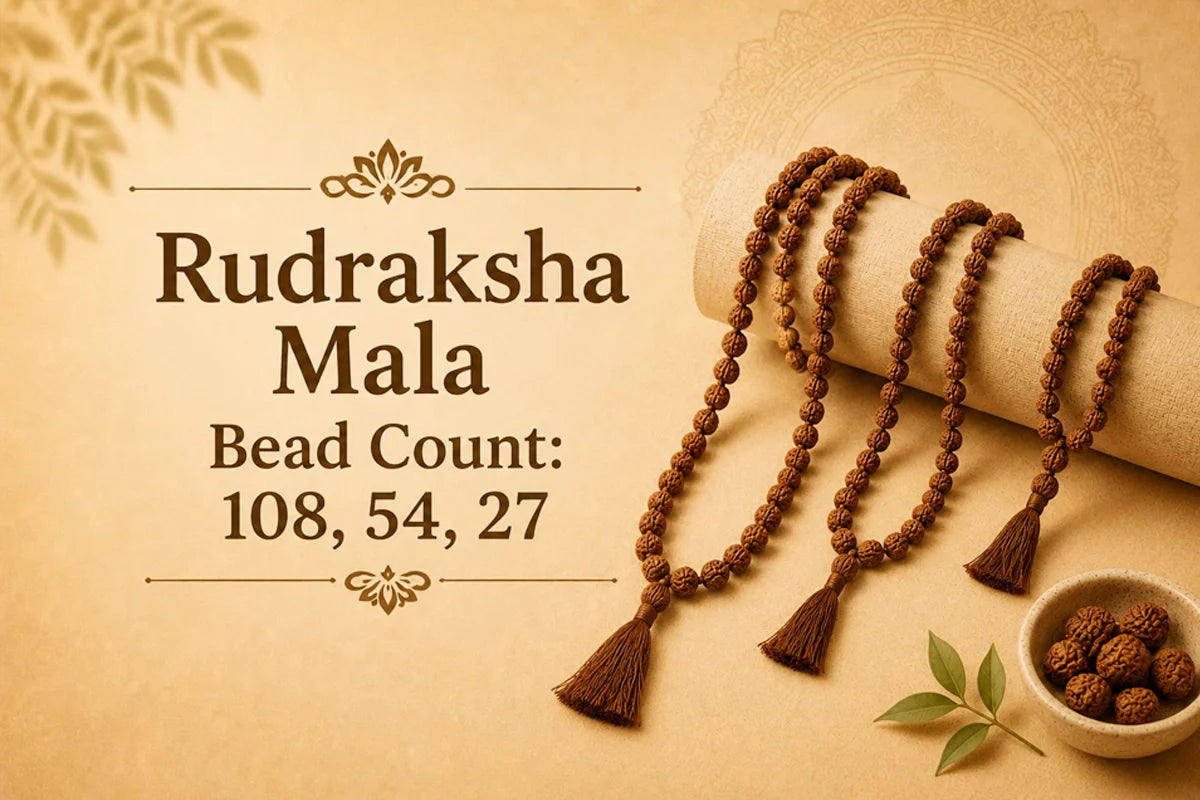
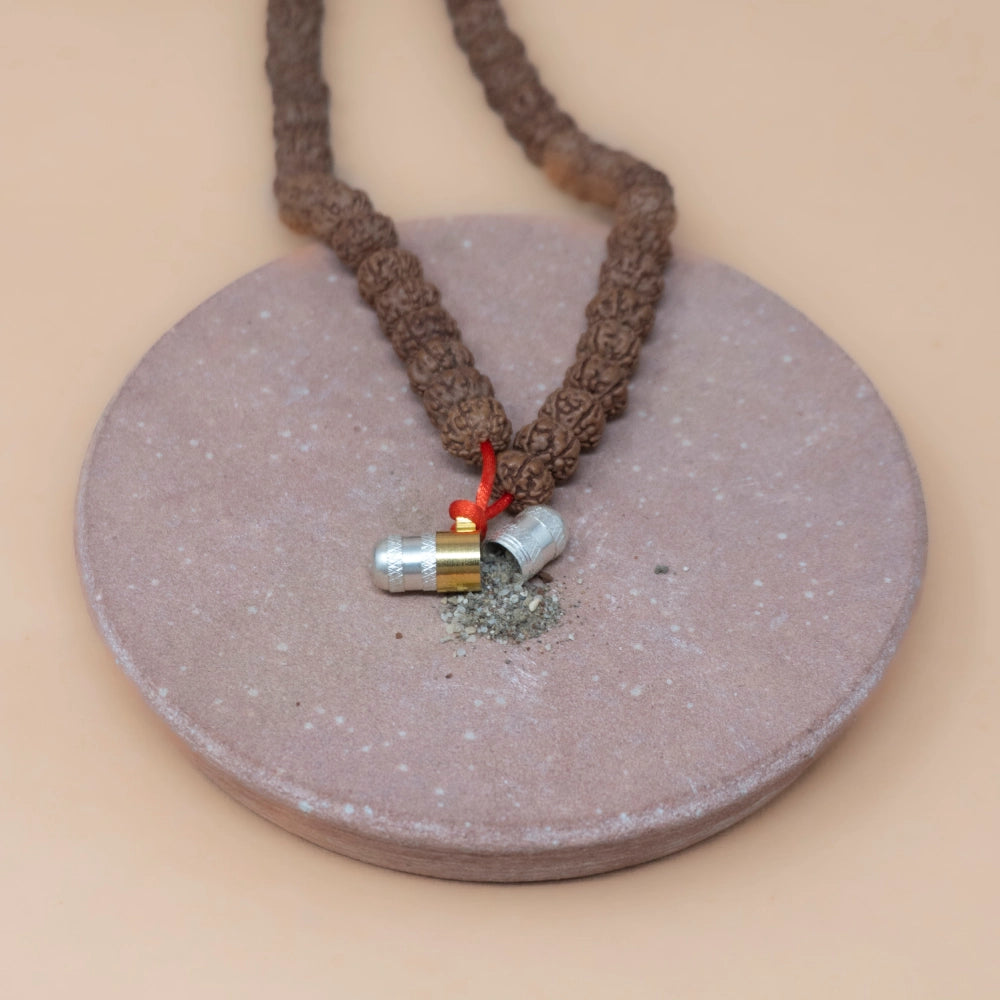
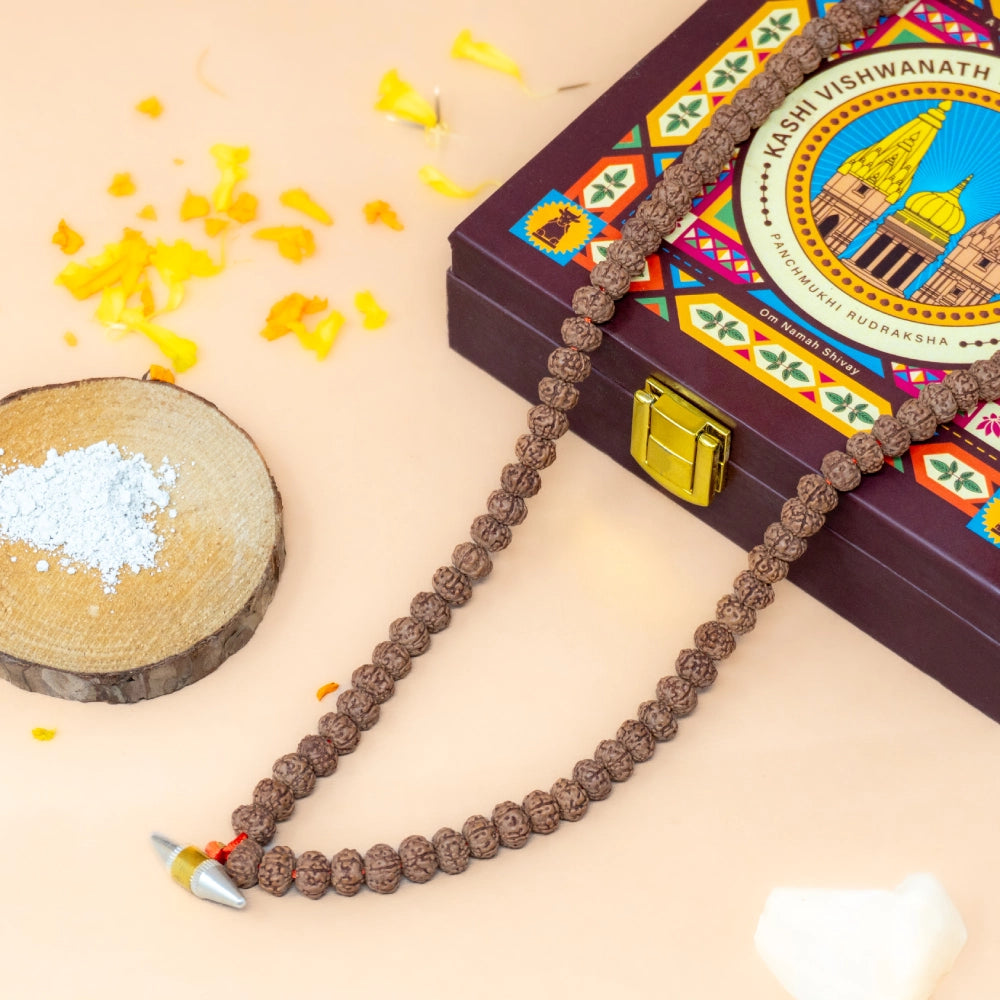
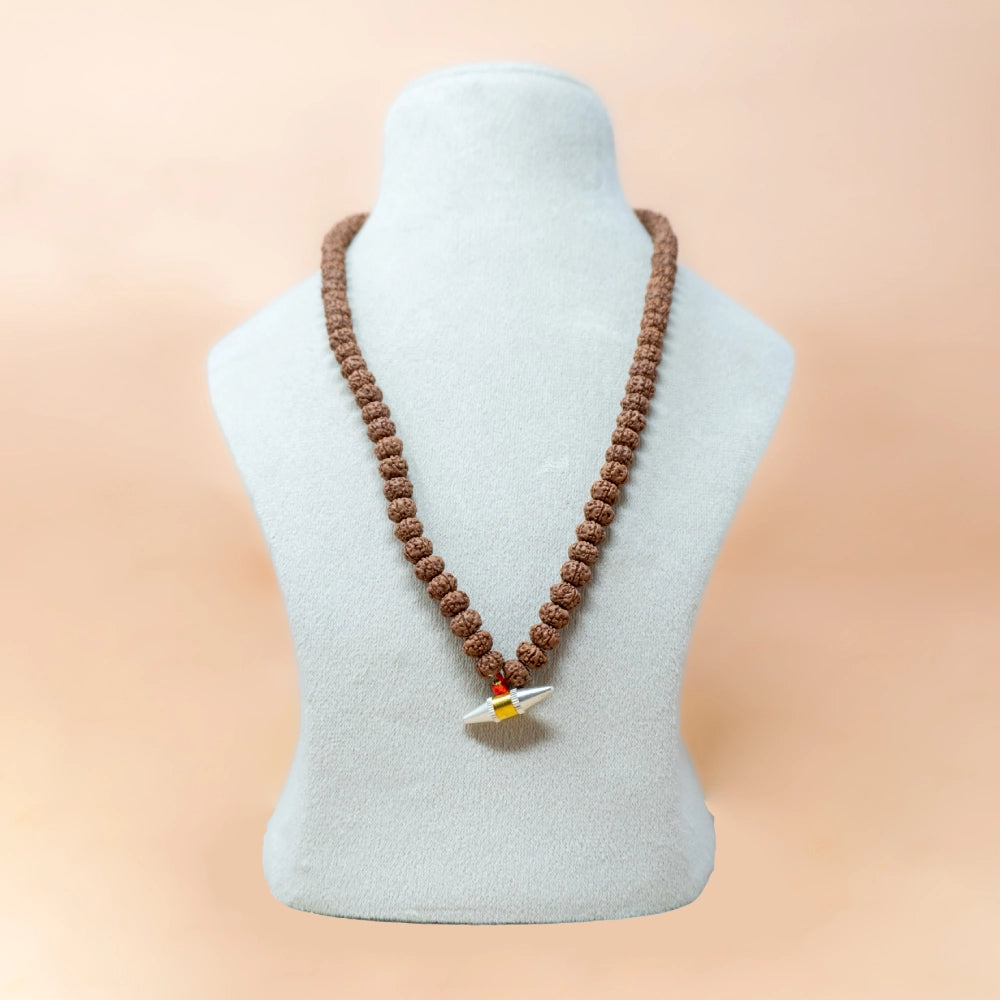
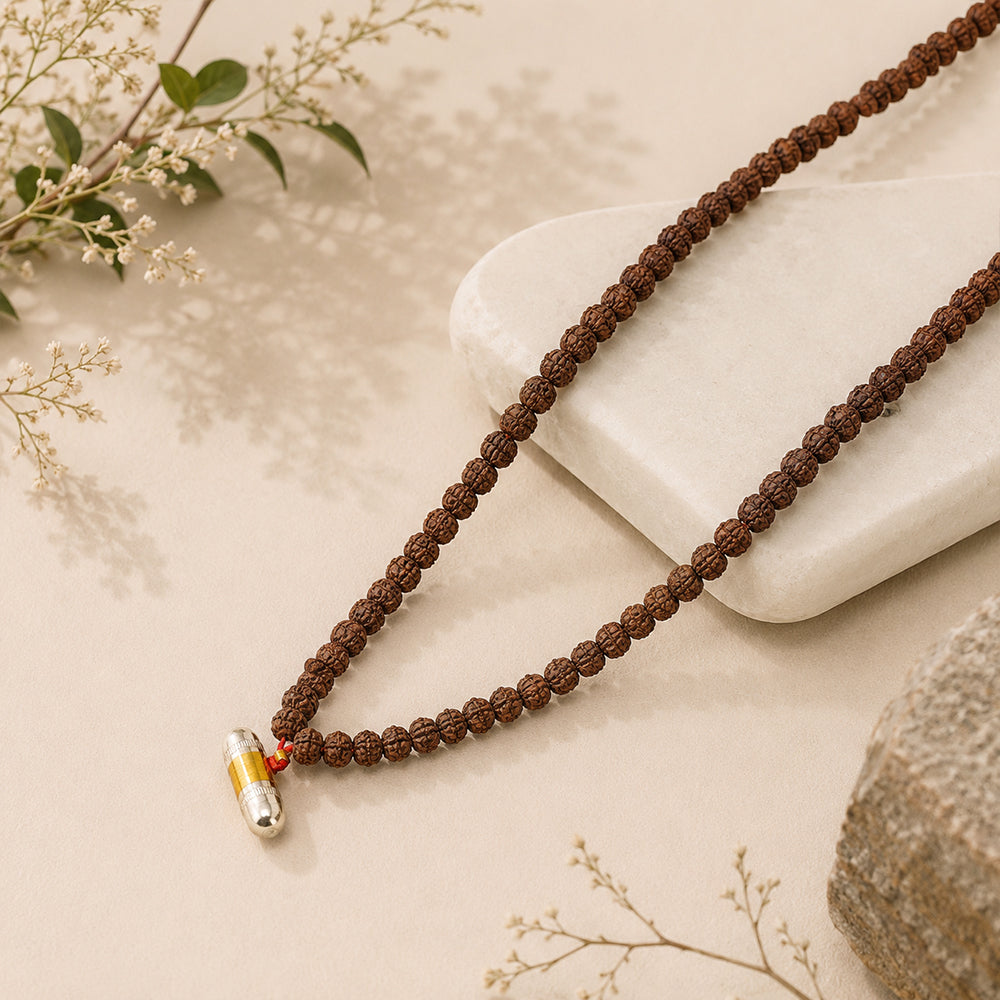
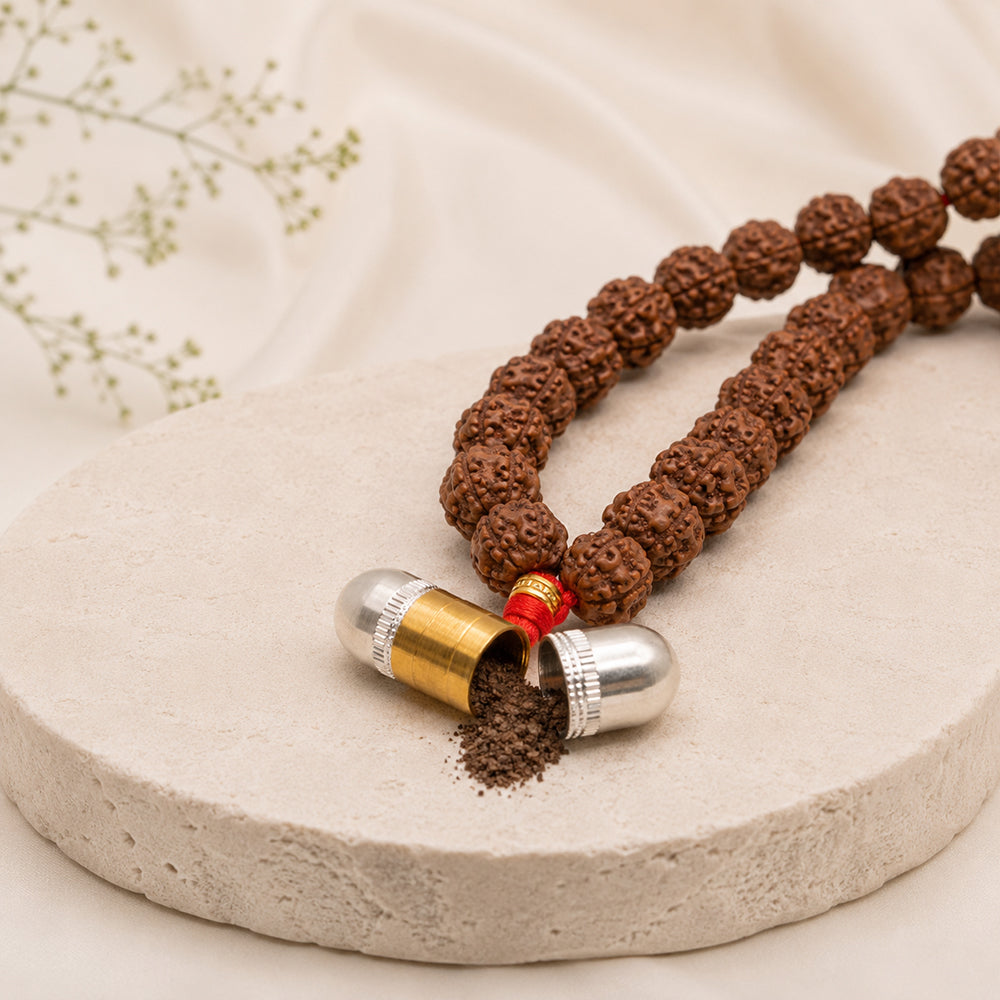
A Rudraksha mala is more than just a series of spiritual beads. In truth, it is a mala that assists worshippers in concentrating on prayers, chanting the mantra, or meditating. While most people are familiar with the standard 108-bead Rudraksha mala, it might surprise them to discover that there are also 54- and 27-bead models.
Does the number of beads in the mala influence its energy level? Between the 27 and the 108-bead mala, there is one more powerful than the other, yet which one of the two is best for newcomers, travelers, and experienced people when it comes to spirituality?
The answer is hidden in the Sanatan Dharma traditions. Each Rudraksha bead count has its meaning in accordance with the sacred mathematics, ancient teachings of the Vedas, and their usage in japa. Thus, knowing the sacred number makes it possible for a worshipper to have a proper choice of their mala rather than just proceeding from tradition.
What is a Rudraksha mala?
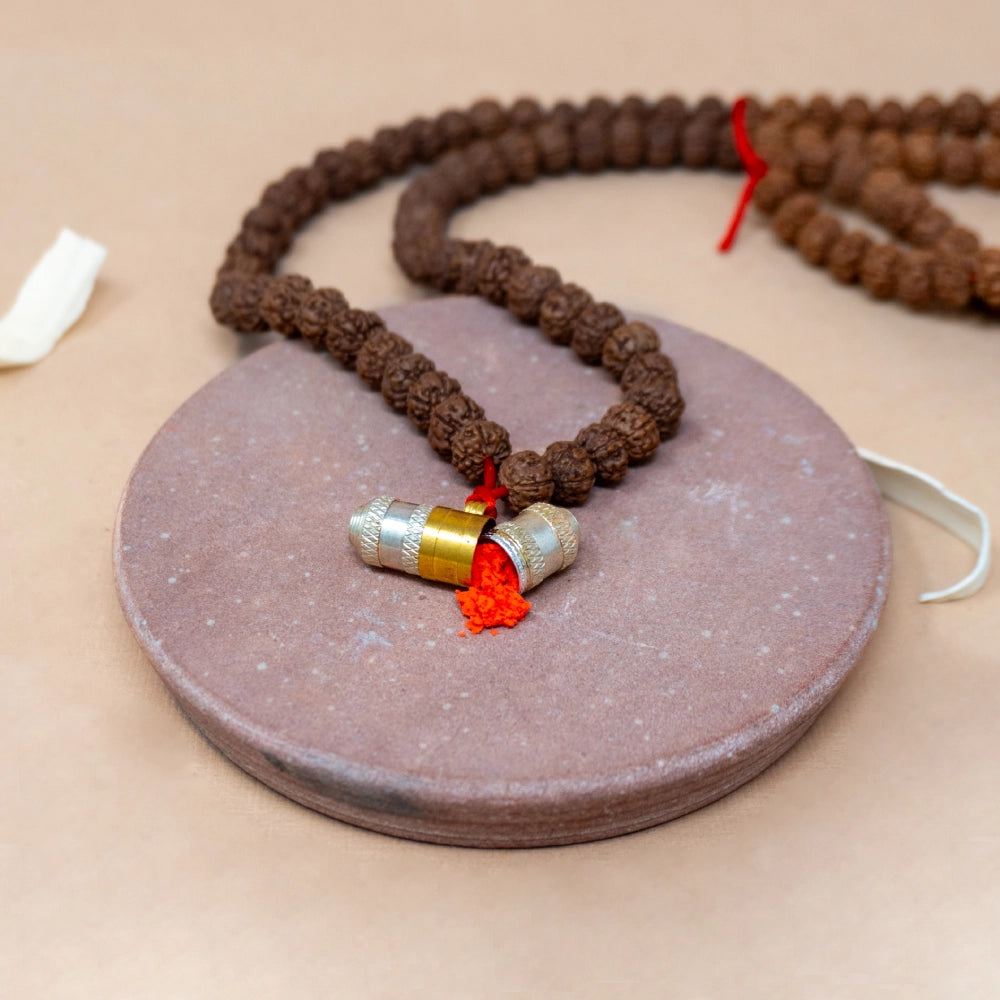
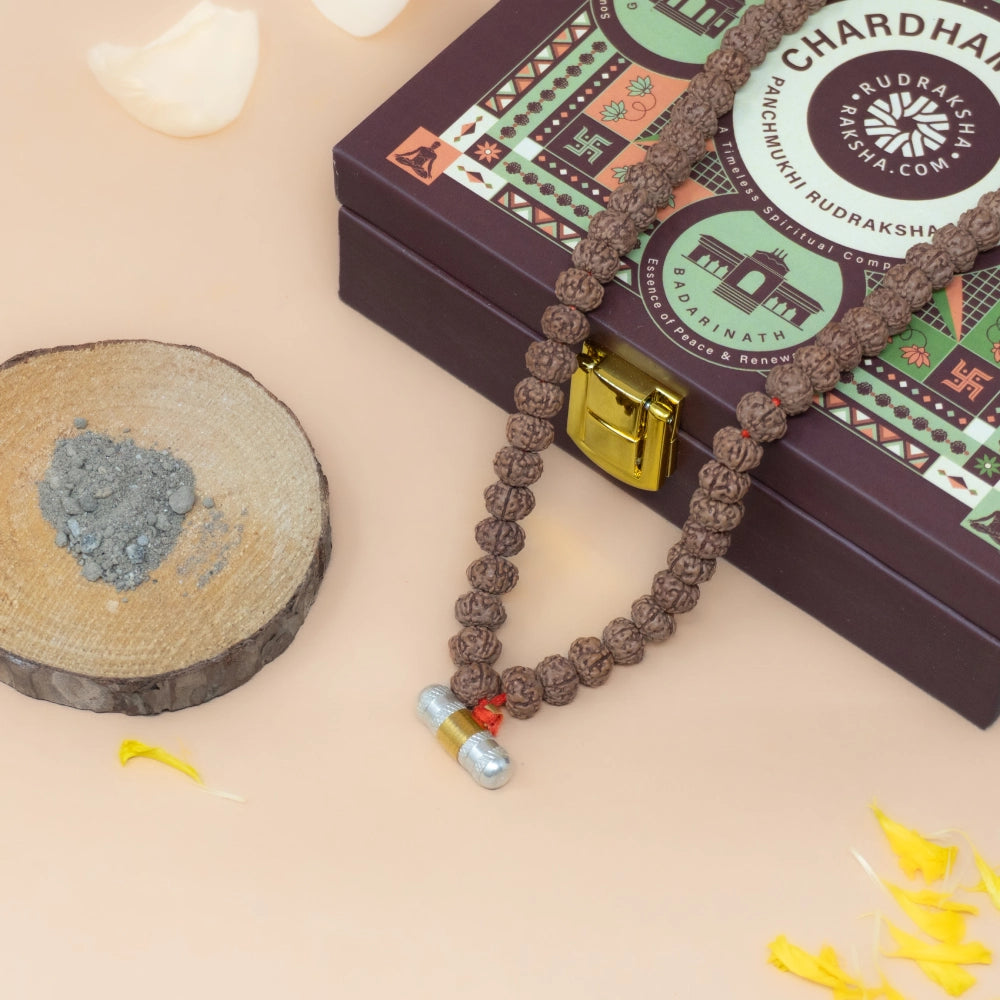
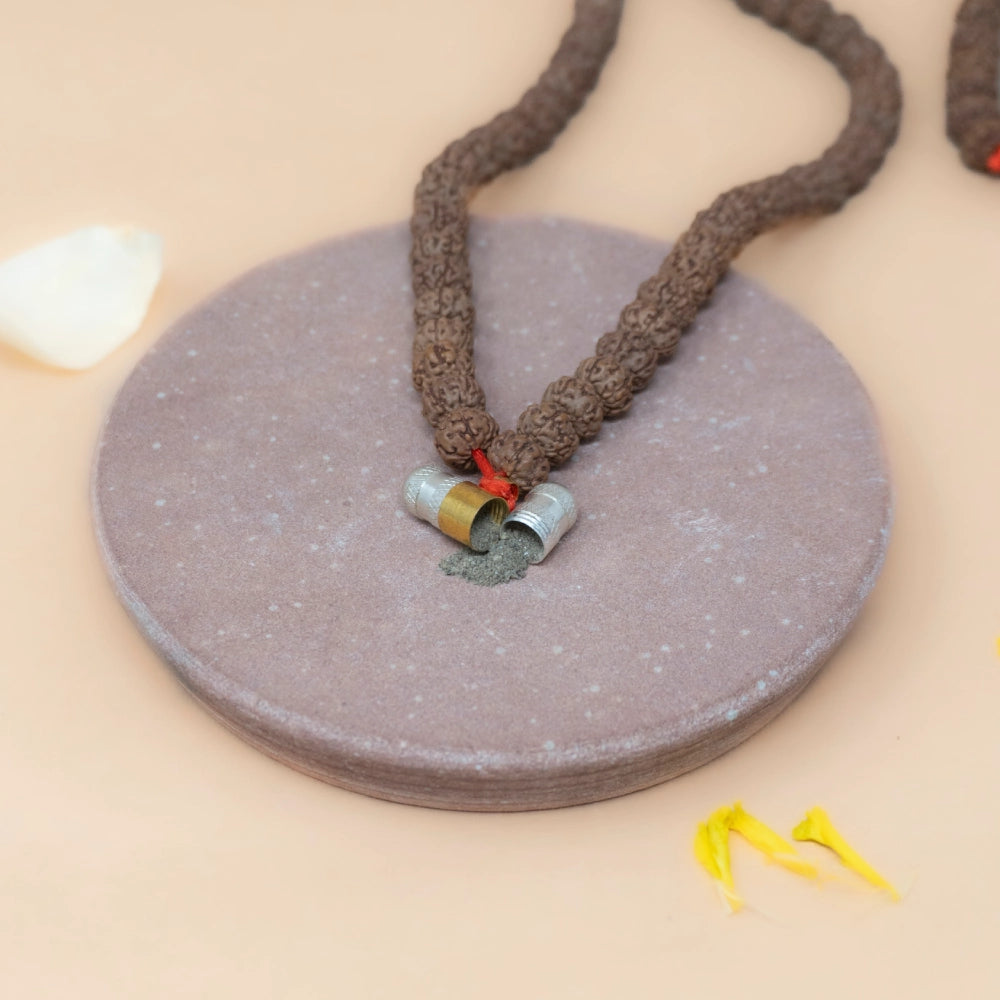
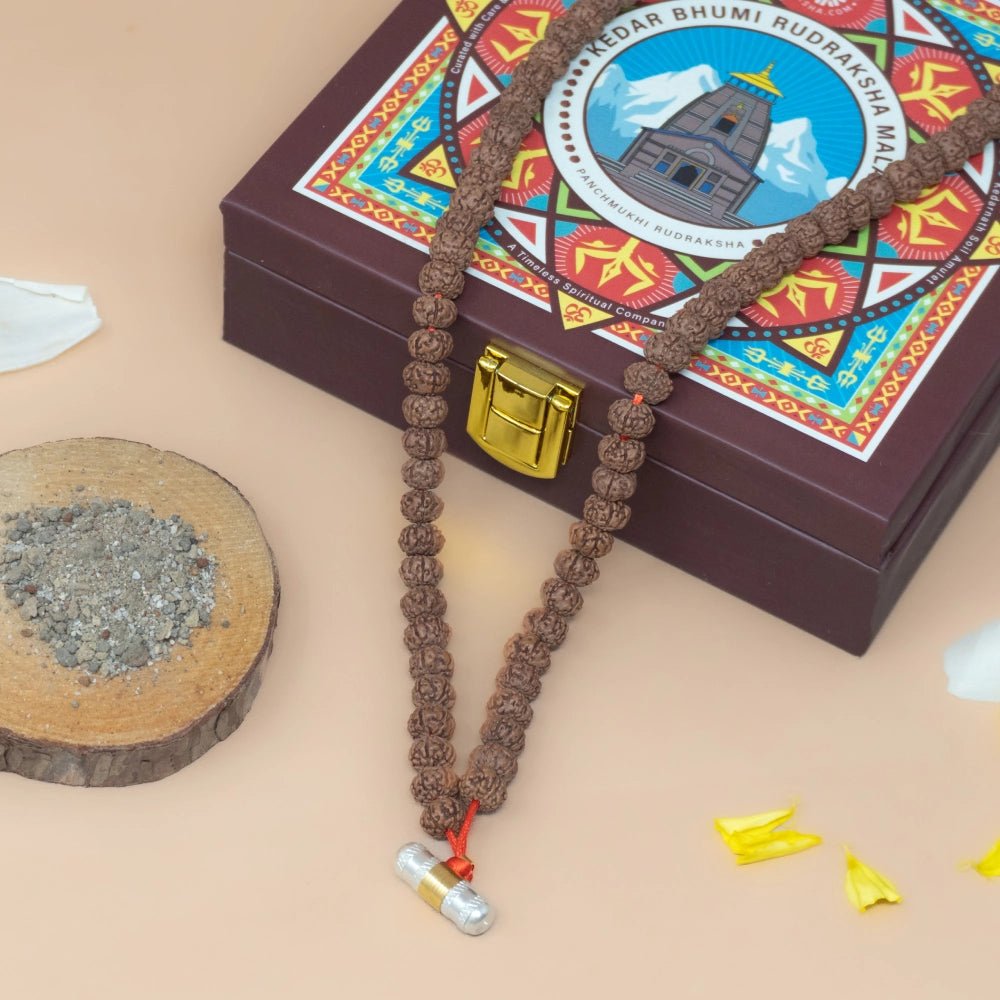
A Rudraksha mala is known to be a spiritual garland made by using Rudraksha beads. Generally, these beads are usually linked with a string, resulting in a circular chain that can be worn or used for counting mantras. The Sanskrit word "mala" simply means "garland." In different spiritual traditions, a mala symbolizes faith, discipline, and continuity in practice.
A historical background
Prayer beads appear to have a significant role in many spiritual traditions in different cultures. In Hinduism and yoga traditions, malas are used to count the recitation of mantras during meditation. They have made Rudraksha malas one of the most popular types of malas because of their association with Lord Shiva and meditation practice.
Why is Rudraksha used for malas
The Rudraksha bead has a strong connection to the practice of meditation and spiritual exercise. The natural structure of the bead makes it easily adaptable in meditative practices.
Why is the number of beads important?
In the Hindu religion, numbers are never ordinary numbers, like 12 Jyotirlingas, 18 chapters of the Bhagavad Gita, and 108 Upanishads; sacred numbers express universal order and philosophy.
Likewise, the number of beads in a Rudraksha mala determines how many mantras one has chanted. The ancient sages invented different numbers of beads for different levels of practitioners so that they could practice without breaking the discipline of spirituality.
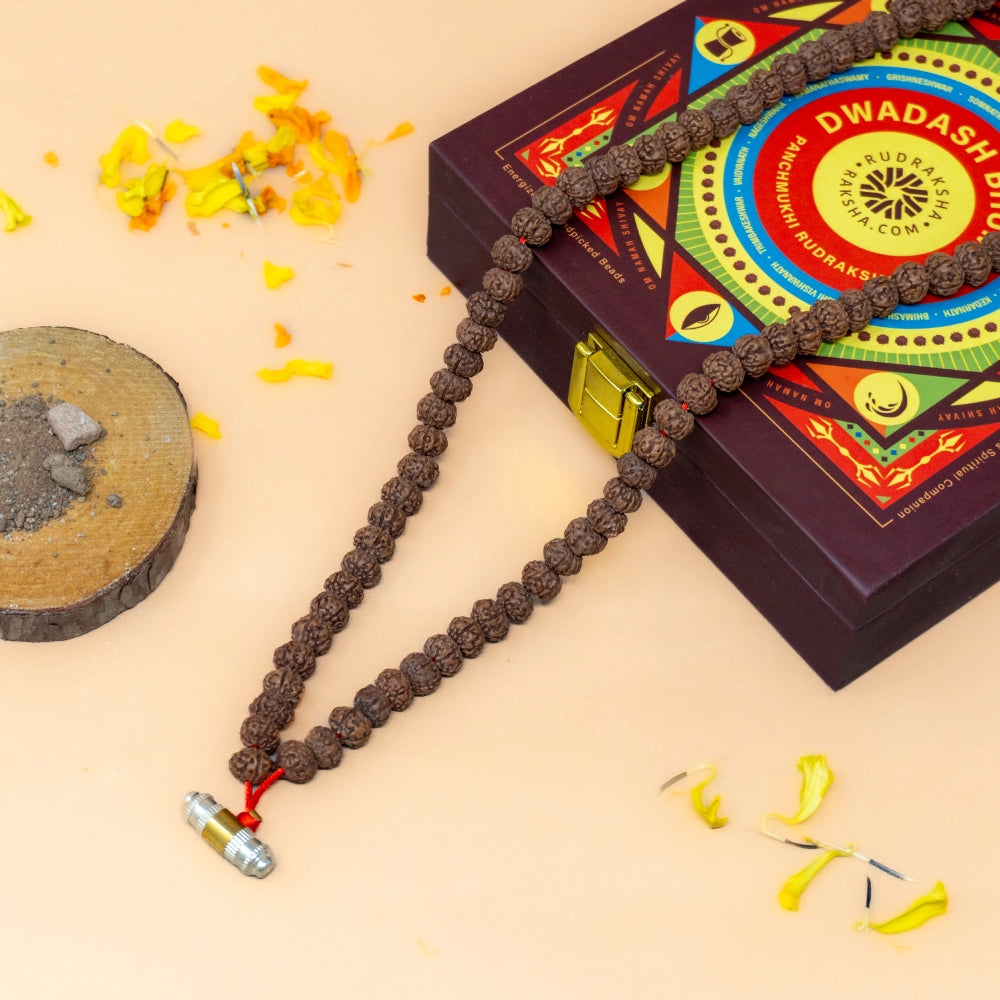
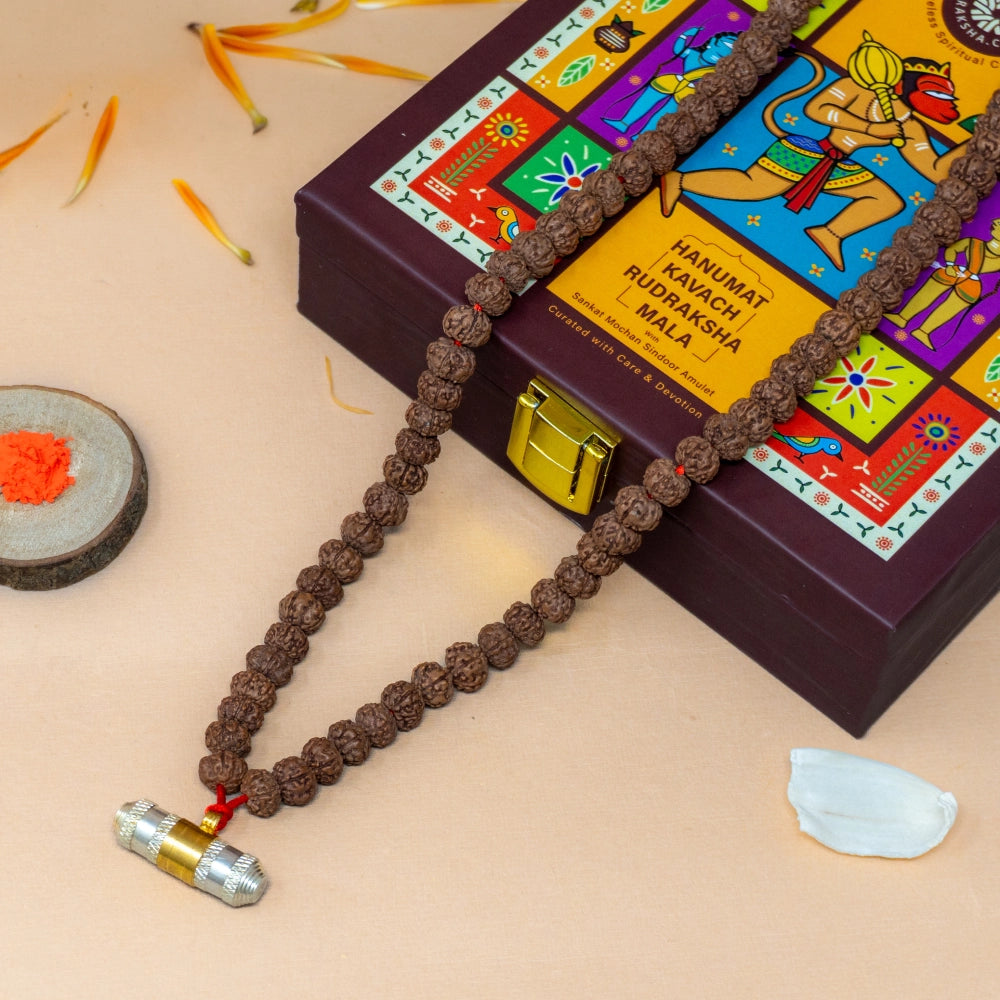
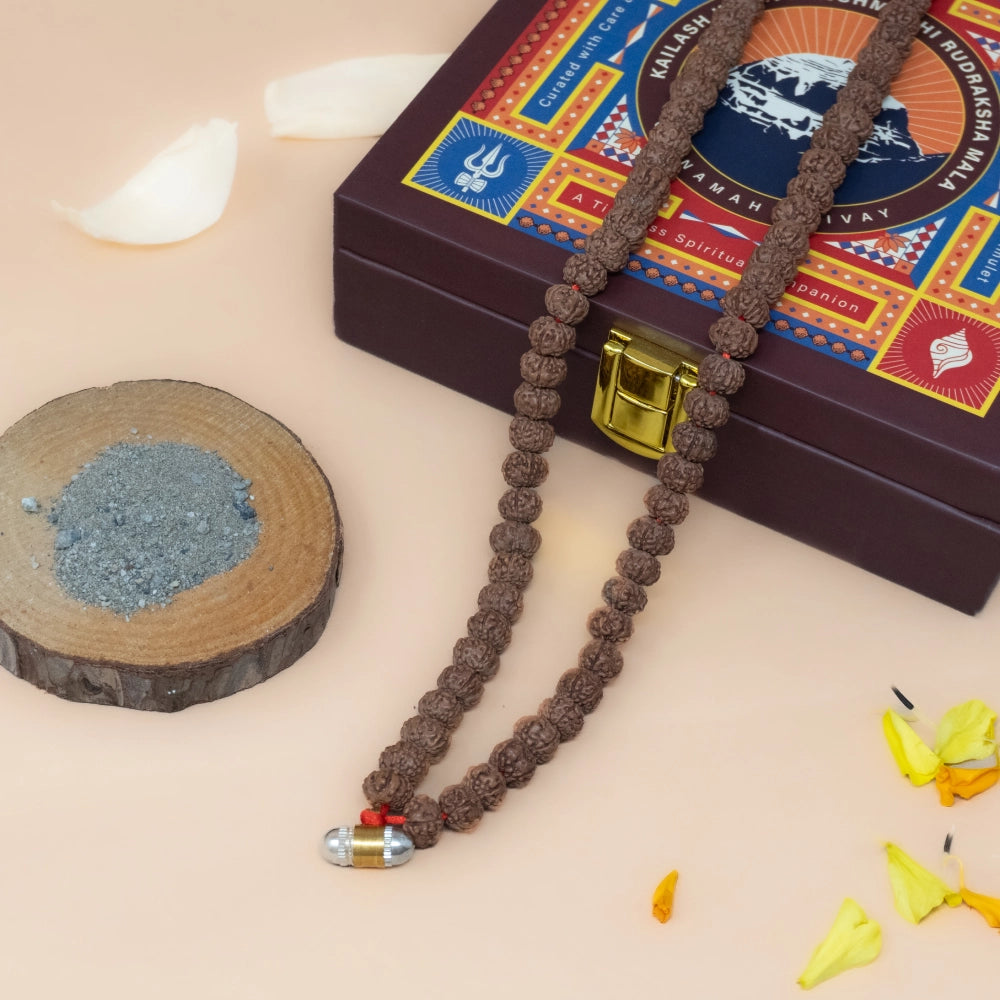
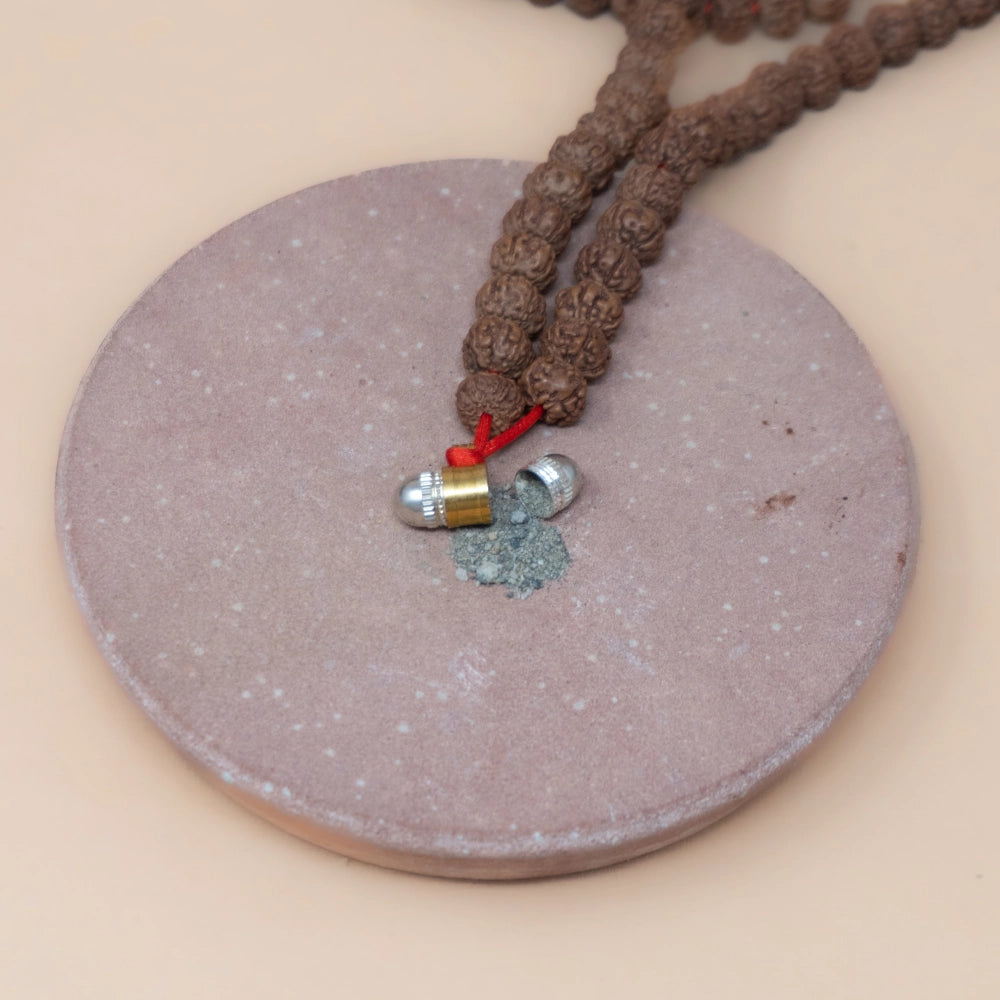
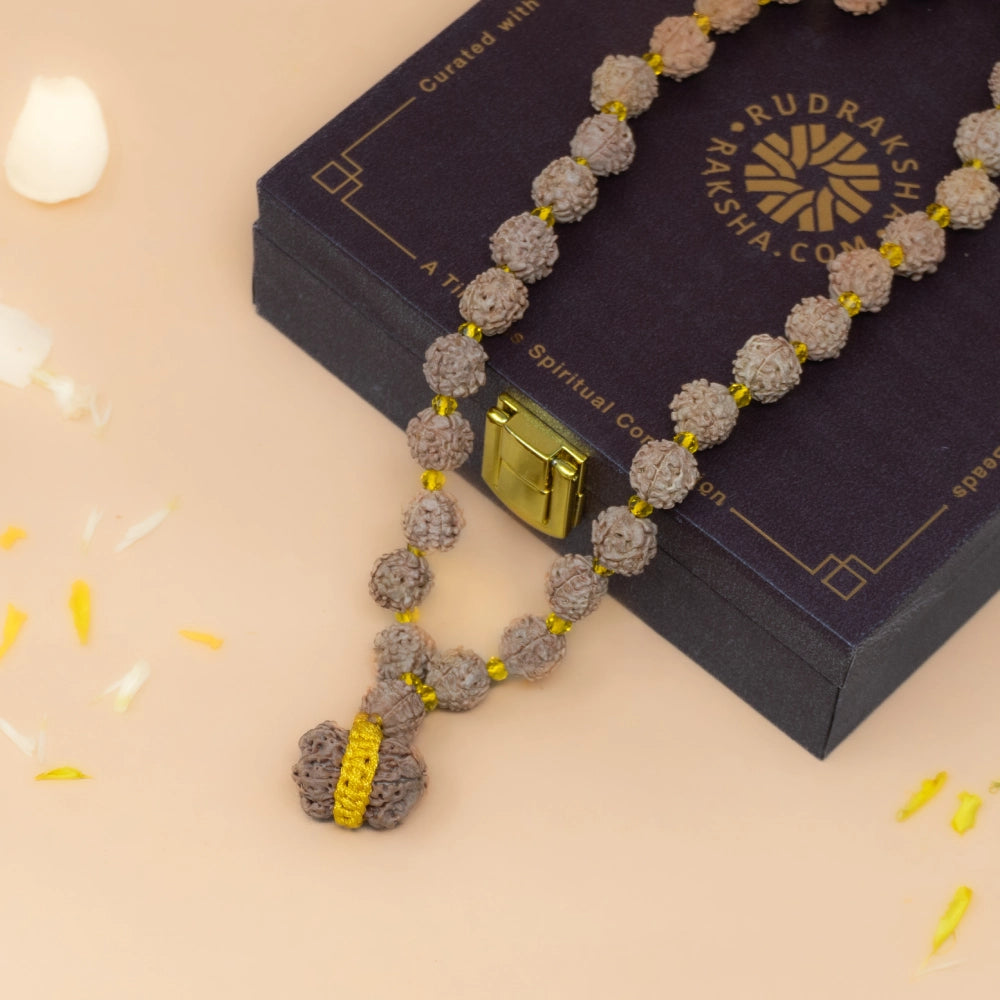
Every classical Rudraksha mala has one bigger bead known as the Meru bead or Guru bead. This bead denotes the Guru or Lord Shiva and teaches the start and the finish of japa. During japa, the devotees do not cross the guru bead. Instead, they go back the other way with the mala in absolute humbleness.
Significance of 108-bead Rudraksha mala
The 108 Rudraksha mala is the most popular and effective way of using a prayer mala that has been suggested for generations in different schools of yoga and Vedic traditions by many people because of the sacred significance of the number 108 in Hinduism.
There are multiple interesting things related to the number 108. For example, it is known that in the old texts the number of Upanishads is equal to 108, and astrology says that the zodiac contains 27 Nakshatras, each consisting of four padas. Thus, the sum of this division is 108. Furthermore, in Yogic philosophy, it is said that the number of 108 Nadis ends in the heart chakra and thus relates to spiritual awakening.
In practice, the repetition of 108 mantras allows you to develop good concentration and calmness. Whether you recite Om Namah Shivaya, the Mahamrityunjaya Mantra, or another type of your personal mantra, you will get spiritual fulfillment by completing a full round of chanting 108 times.
Thus, the 108-bead Rudraksha mala can be used for:
-
Everyday chanting of mantras
-
Meditation
-
Yoga
-
Sadhana practice
-
Temple puja
If you want the most authentic spiritual experience, the 108-bead mala remains the traditional choice.
Understanding the 54-bead Rudraksha mala
The 54-bead Rudraksha mala is half of a typical 108-bead mala in size. In terms of spiritual meaning, the size is irrelevant because the two rounds must be done to achieve 108 repetitions. A large number of bhakts opt for the 54-bead mala, as it is lighter and more convenient for daily use than the bigger mala and is also more practical. The number 54, in itself, is an important number because it stands for half of the grand heavenly cycle of 108 and thus is good for people who meditate regularly but prefer to have a smaller mala. This number of beads is especially popular among employees, tourists, and people who meditate several short times during the day.
The importance of a 27-bead Rudraksha mala
The figure 27 is one-fourth of the total 108, and in practical terms using mala with 27 beads would require four uses of the mala of 27 beads to complete a full cycle of 108 mantras. Besides, another reason for the relevance of 27 beads mala is that this number signifies the 27 Nakshatras in Vedic astrology, which makes 27-a-bead mala perfect for someone who is into astrology and planets.
-
Meditation during breaks in the office
-
Travelling
-
Daily affirmations
-
Japa for beginners
-
Wearing a mala as a bracelet
For busy people, the 27-bead Rudraksha mala makes meditation more accessible without spending a long time in meditation.
Does a bigger mala enhance its spiritual usage?
This is among the common misunderstandings regarding Rudraksha malas. It is a misconception that increasing the number of beads increases the spiritual power of a mala. Each natural rudraksha has a natural energy irrespective of whether it is part of a 27-mala, a 54-mala, or a 108-mala.
The number of beads affects the number of times the mantras are spoken, but if a practitioner using a 27-bead mala repeats the mantra the same number of times as someone with a 108 mala, both would see the same spiritual results. Thus, when it comes to spiritual practice, it is not the number of beads that is important, but one’s dedication and persistence.
Which Rudraksha mala is the best for you?
Choosing a Rudraksha mala is both a personal choice and based on convenience.
-
If you’re doing traditional chanting of mantras and worshiping in temples, the situation calls for a 108-bead mala.
-
If your goal is to meditate regularly with something lighter for daily wear, a 54-bead mala fits the bill very well.
-
If you are a beginner, travel often, or want a mala you can use on the go, a 27-bead mala is your best bet.
Many advanced practitioners may have more than one mala for different plans or purposes and various bead counts.
Does the Mukhi matter more than the bead count?
Absolutely yes. The count of beads dictates your chanting, whereas the Mukhi is responsible for the Rudraksha’s qualities.
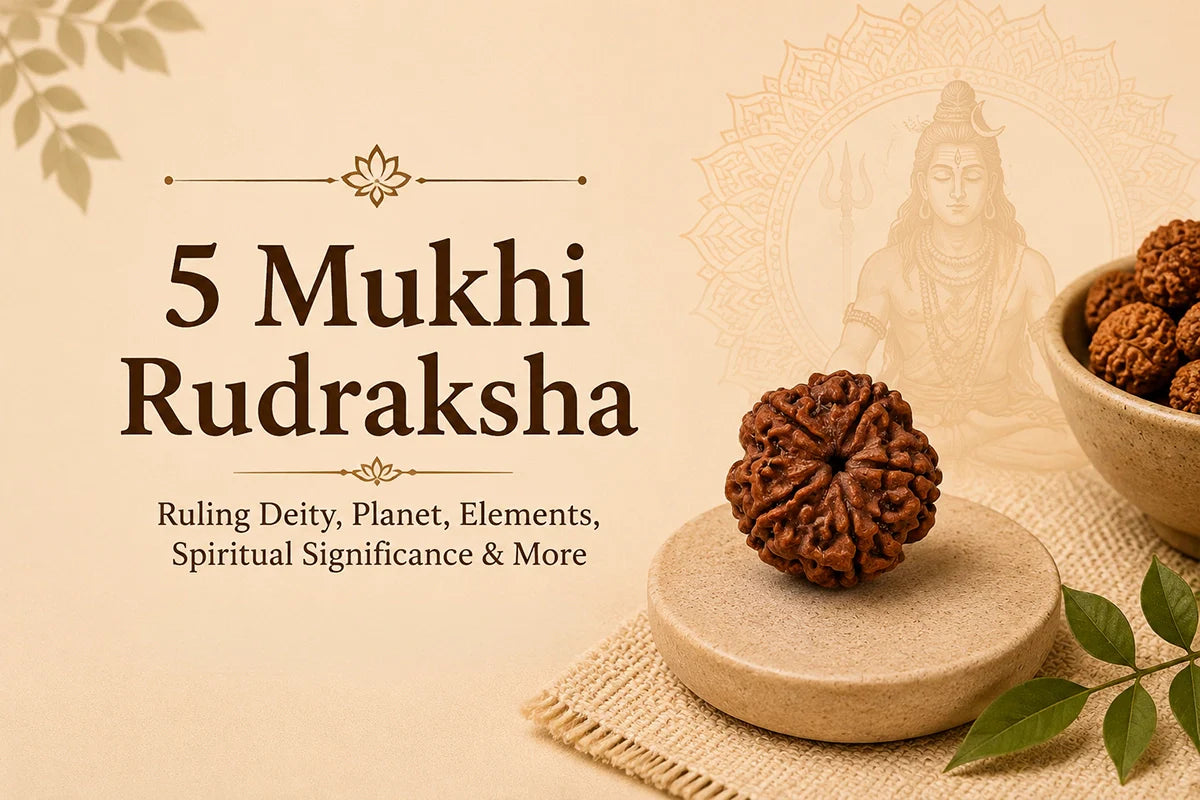
For instance, the 5 Mukhi Rudraksha, which is the most popular type of Rudraksha, represents Lord Shiva and can be worn by a majority of souls. Other Mukhis are also connected with other divine beings and their respective benefits.
Irrespective of how many beads are there in your mala (27/54/108, etc.), make sure you are using a genuine, naturally formed Rudraksha obtained from a reliable source.
Final thoughts
Regardless of whether your Rudraksha mala contains 108, 54, or even 27 beads, the true essence of its value lies in its daily use with devotion. According to the ancient sages, spirituality wasn’t determined by size but by the purity of the heart.
The 108-bead mala is for complete spiritual discipline, the 54-bead mala is a good combination of tradition and practicality, and the 27-bead mala can be easily incorporated into the everyday schedule of modern people.
Instead of looking for the “best” one, figure out which Rudraksha mala is the most beneficial for your chanting, meditation, and connection with Lord Shiva.