
How to Identify Fake vs Real Rudraksha: Complete Guide
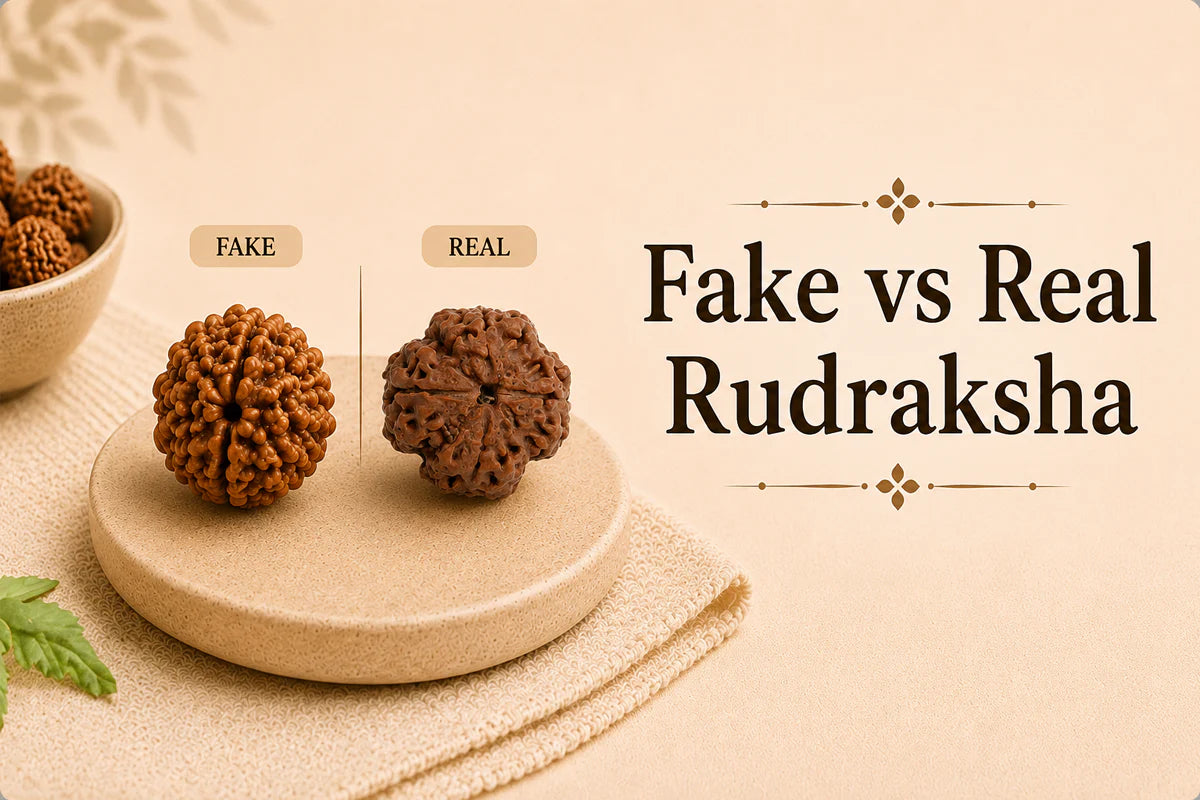
Rudraksha is not only a sacred bead but also a powerful spiritual aid that one can use for chanting, meditation, and self-development, along with the presence of the blessings of Lord Shiva. Nevertheless, the market is flooded with fakes, carved beads, glued beads, and other imitations because of the increased requirement of authentic Rudraksha beads.
This guide on Rudraksha authenticity will help you learn everything about differentiating an authentic from a fake Rudraksha by providing details regarding visual identification, myths about Rudraksha, authentic test methods, and valuable buying tips. At the end of this article, you will become an expert at identifying authentic Rudraksha and avoid costly mistakes.
Why authenticity matters
The formation of a Rudraksha, and not just its appearance, is what gives it its value. An artificial, carved, bonded, or even manipulated bead can resemble a real bead, but does not have the distinct formation of a Rudraksha.
Whether you are purchasing a 5 Mukhi for regular use or an exotic Mukhi for spiritual purposes, authentic Rudraksha identification must come first and foremost.
How to identify original Rudraksha
To identify if the Rudraksha that you have purchased is real or old, you have to check the following things:
1. Examine the natural mukhis carefully.
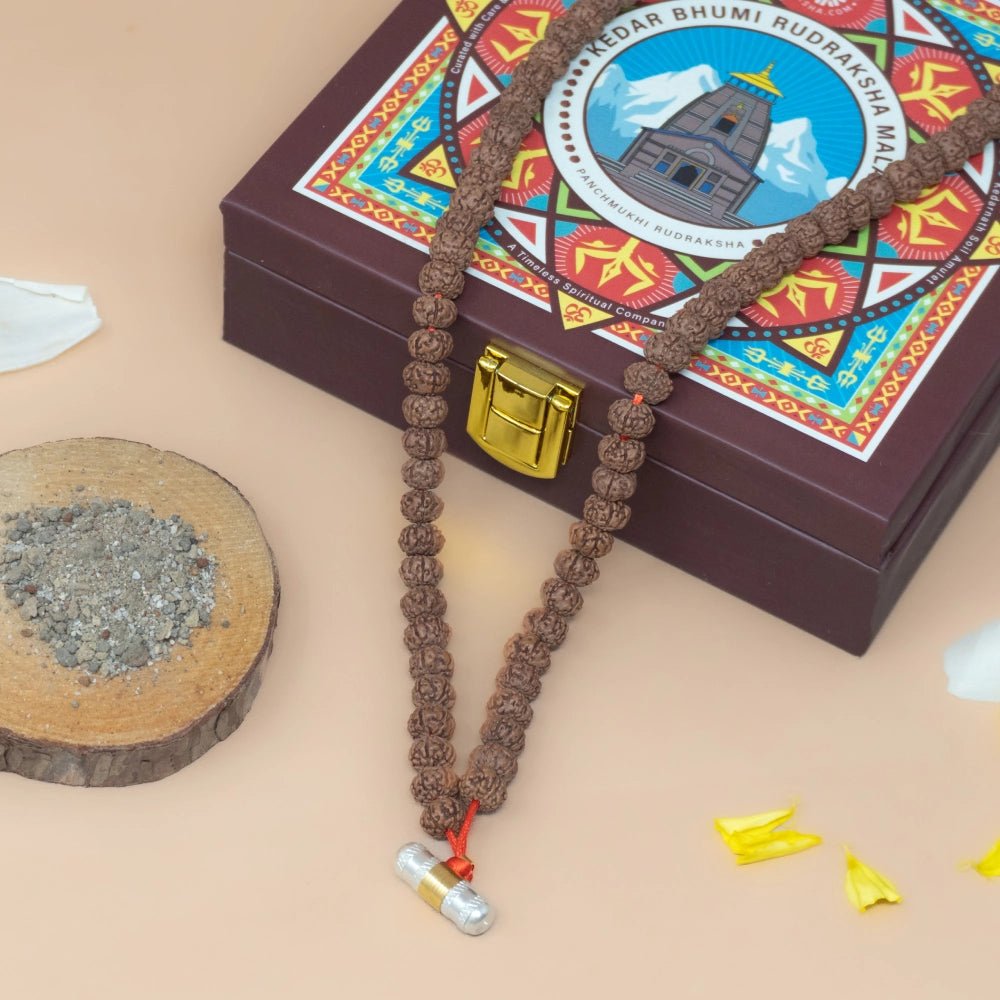
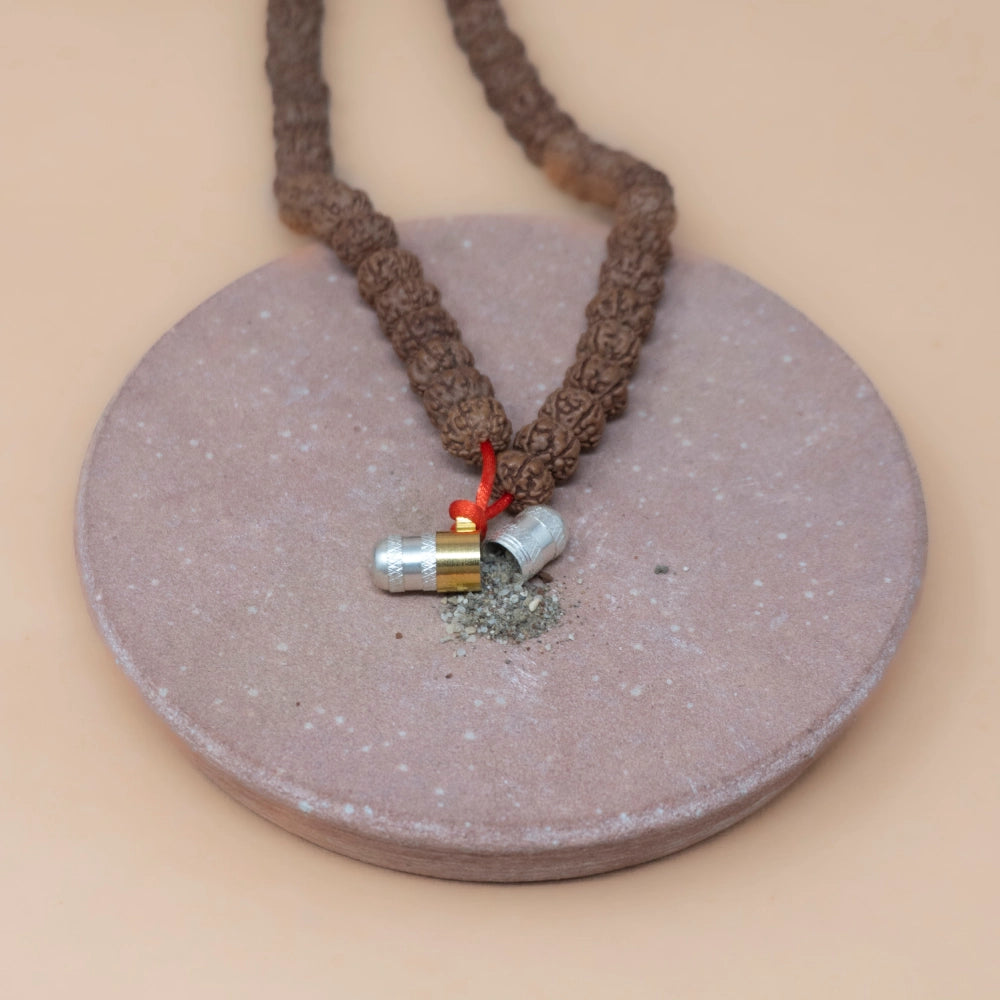
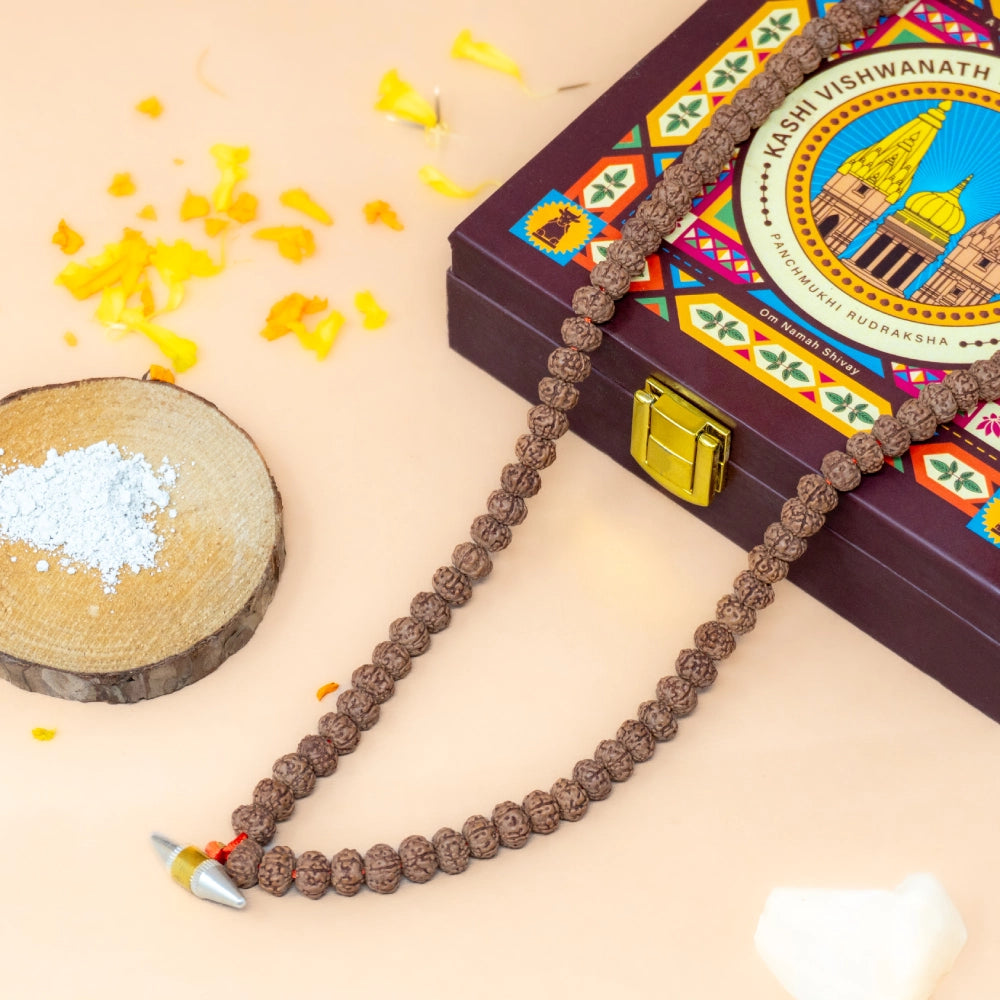
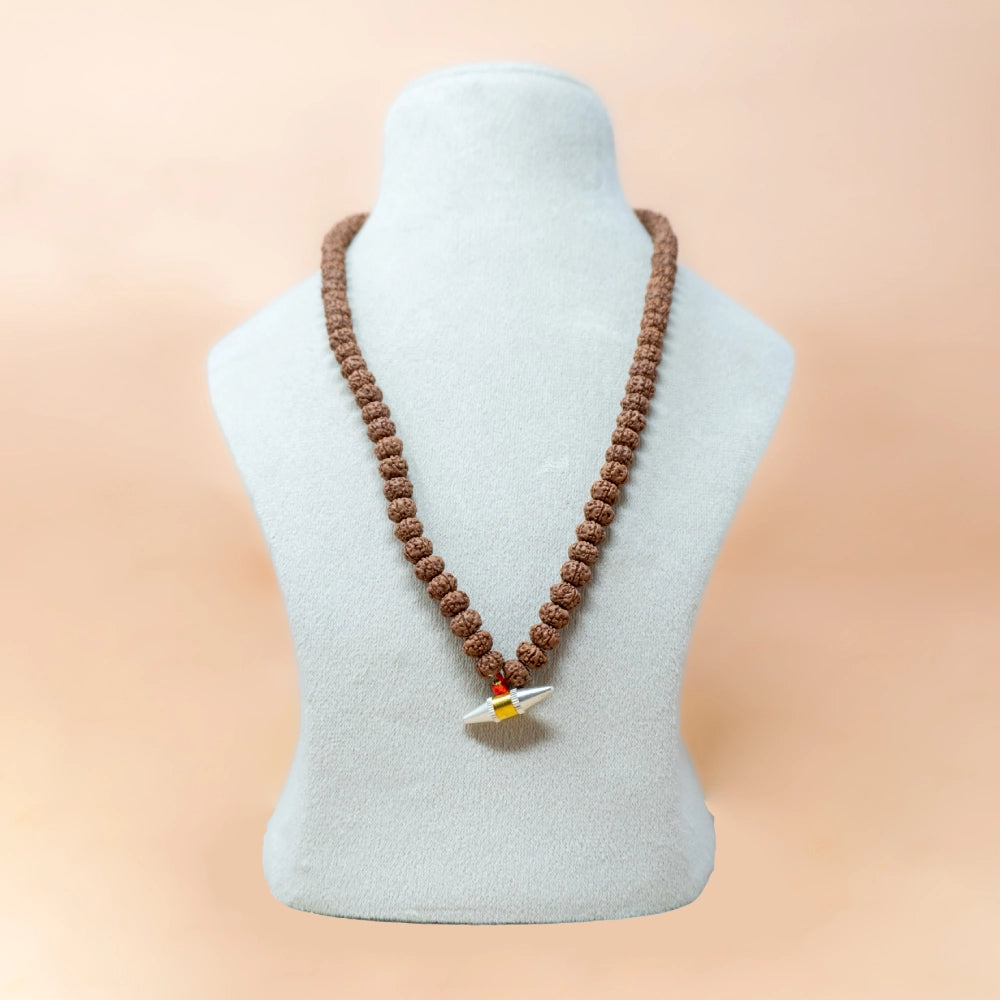
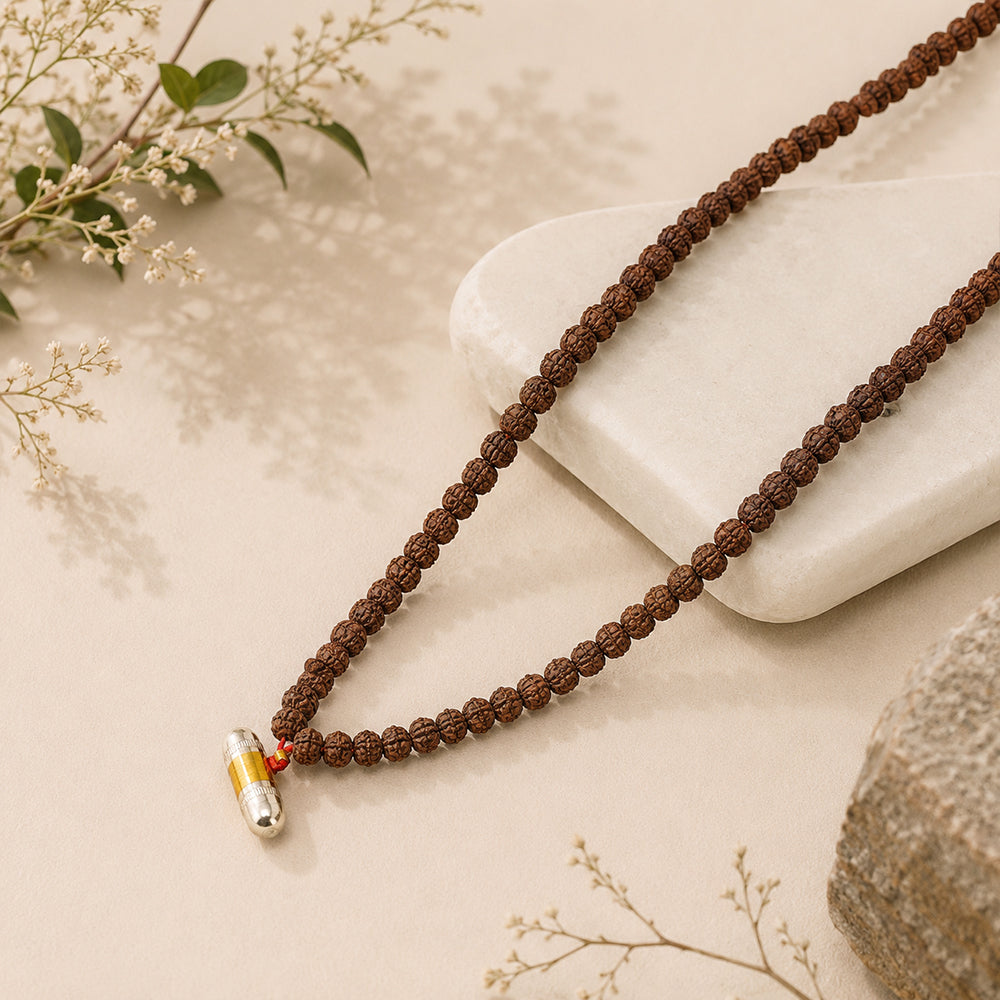
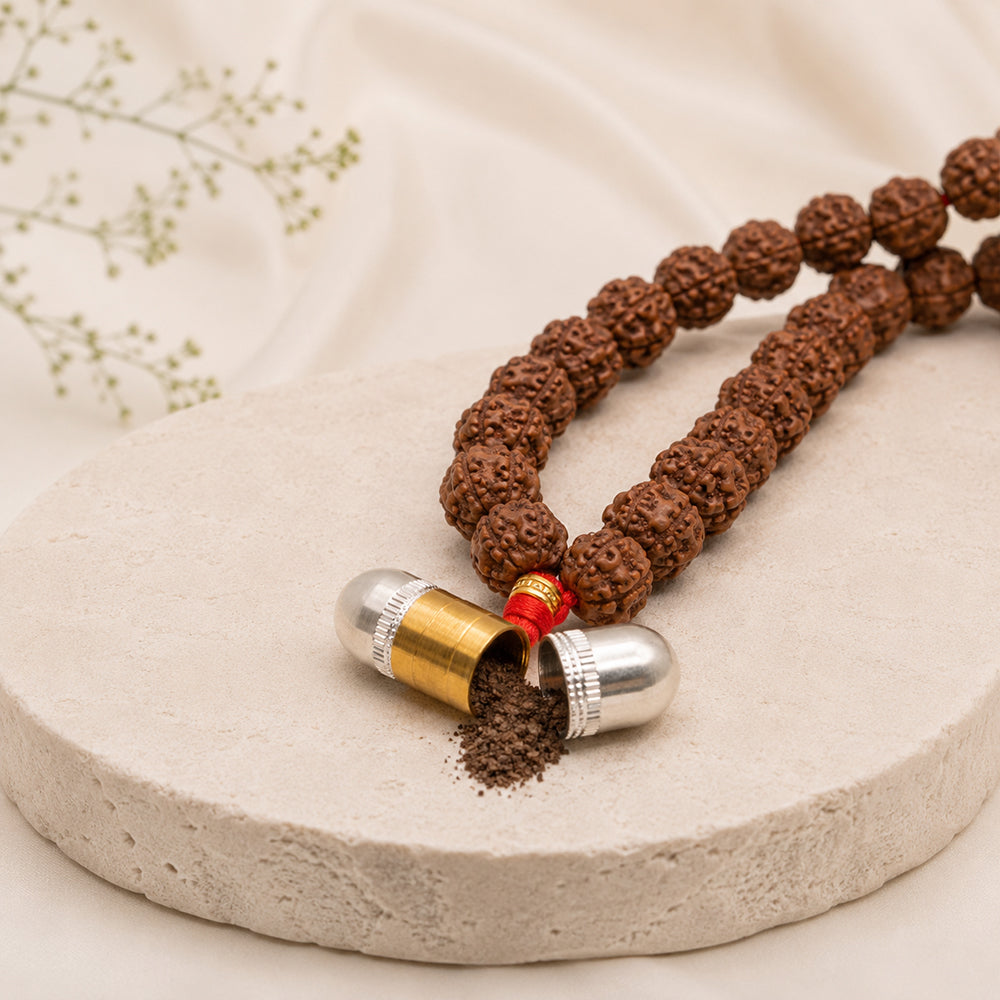
The observation of vertical lines (mukhis) forms the very first step of identifying the number of Rudraksha mukhis. Lines that occur naturally and uniformly throughout the bead from top to bottom make the Rudraksha bead genuine. They do not consist of scratched lines but are rather irregular and defined lines.
Here are the signs you need to look for:
-
Continuously running lines from pole to pole.
-
There are no signs of machine carving or cut marks.
-
There are certain irregularities in the naturally occurring symmetrical pattern.
-
The number of Mukhis usually corresponds to the number of seed chambers.
-
Artificially carved mukhis tend to be too deep, sharp, or straight.
2. Check the surface texture
An authentic Rudraksha never looks machine-made. Original beads have:
-
Rough, woody texture
-
Natural bumps and ridges
-
Small pores and imperfections
-
Unique patterns on every bead
If every line looks identical or the surface feels polished like plastic, it's likely fake.
3. Observe the natural hole
Every genuine Rudraksha develops around a natural central channel where it was attached to the tree. Even though sellers might clean or even widen the hole for threading, it must never look perfectly machine-drilled and must not be too big.
4. Notice the weight
A real Rudraksha feels dense and solid. It should never feel
-
Hollow
-
Extremely lightweight
-
Plastic-like
-
Soft when pressed
Natural Rudraksha has the feel of aged hardwood rather than synthetic material.
5. Look at the natural colour
Original Rudraksha generally appears in earthy shades like
-
Light Brown
-
Reddish Brown
-
Dark Brown
Be cautious if you notice the following:
-
Bright red polish
-
Artificial varnish
-
Glossy coating
-
Painted finish
Natural aging darkens Rudraksha over time, which is completely normal.
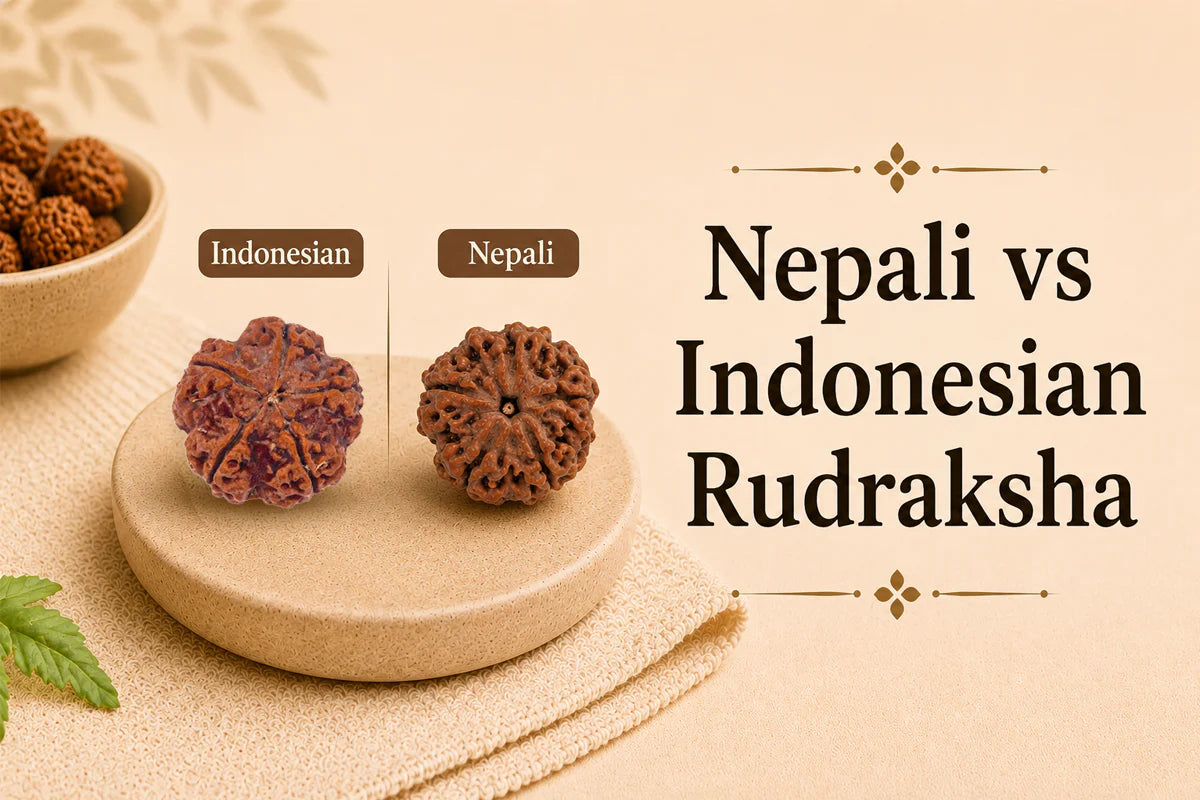
Nepal Rudraksha vs Java Rudraksha
Buyers tend to think bigger beads mean better beads; however, it is not necessarily true.
Nepal Rudraksha
-
Bigger size
-
Deeper lines
-
Prominent texture
-
Very popular in traditional malas
Java Rudraksha
-
Smaller in size
-
Fine Mukhi lines
-
Smooth in appearance
-
Equally natural and authentic
Both Nepal Rudraksha and Java Rudraksha are authentic. Size does not determine authenticity.
Popular fake Rudraksha tests: Truth vs. myth
There are a lot of traditional methods available online, but very few of them are validated by science.
Water test
As per a popular fake Rudraksha test, all genuine beads will always sink.
Reality: All authentic Rudrakshas tend to sink. But some genuine beads may float depending on the density and drying period. Plastic beads can be made heavy by fake sellers.
Conclusion: Not useful for authentication; useful only for plastic fakes.
Copper coin test
Others believe that energy from the heavens makes the Rudraksha spin between two copper coins.
Reality in science: The bead spins due to its geometry and friction, not because it exists.
Conclusion: Not a trustworthy identifying technique.
Milk test
There is a popular misconception that milk will not become spoiled once an authentic Rudraksha is put into it. There is no scientific evidence at all to support this statement.
Conclusion: Myth.
Boiling test
The method of finding glued beads is to boil them. Boiling can destroy even an authentic bead, although glue might sometimes get separated.
Conclusion: Never advised.
The most reliable test: X-Ray Rudraksha test
Among all available methods, the X-ray Rudraksha test remains the most trusted.
An X-ray reveals:
-
Internal seed chambers
-
Natural formation
-
Signs of artificial carving
-
Glued sections
-
Correct Mukhi count
Since the internal compartments naturally match the external Mukhis, this test offers the highest level of accuracy. If you're purchasing an expensive or rare Rudraksha, always request an X-ray Rudraksha test report.
Common types of fake Rudraksha
Knowing how counterfeit beads are made can help you avoid them.
-
Plastic and resin beads: These beads are lightweight, smooth, perfectly formed, and exhibit repetitive designs.
-
Wooden carved seeds: Seeds of betel nuts and other types of wood have been carved to make fake mukhi.
-
Artificial mukhis: Some sellers convert a common 5 Mukhi into an expensive 9 or 11 Mukhi by carving additional grooves.
Look for:
-
Tool marks
-
Uneven cuts
-
Disconnected grooves
Glued Rudraksha: Rare varieties like Gauri Shankar are sometimes imitated by joining two separate beads using adhesive.
Inspect carefully for:
-
Glue residue
-
Colour mismatch
-
Visible joining lines
Decorative carved symbols: Perfect carvings of "Om," Trishul, snakes, or other symbols are usually man-made. Natural Rudraksha develops organically—it does not grow with perfectly engraved symbols.
Original Rudraksha buying guide
Choosing the right seller is just as important as examining the bead itself.
Buy only from trusted sellers: Buy from reputable spiritual organizations or trusted experts on Rudraksha with clear business dealings.
Ask for Rudraksha certification: A reliable seller should provide proper Rudraksha certification, preferably backed by X-ray analysis or laboratory verification.
Always verify that the certificate comes from a recognized testing source.
Inspect before buying
Check:
-
Natural Mukhi lines
-
Surface texture
-
Hole formation
-
Signs of glue
-
Artificial polishing
Never hesitate to ask questions.
Ask about the origin
A knowledgeable seller should clearly explain the following:
-
Whether it is Nepal Rudraksha or Java Rudraksha
-
Mukhi count
-
Rarity
-
Recommended usage
Transparency builds trust.
Beware of unrealistic prices: If someone offers a supposedly rare Rudraksha at an unbelievably low price, treat it as a warning sign. An authentic high-mukhi Rudraksha naturally commands a premium because of its rarity.
Quick checklist for genuine Rudraksha identification
Before purchasing, ask yourself:
-
Natural continuous Mukhi lines
-
Rough woody texture
-
Earthy brown colour
-
Natural central hole
-
No glue or carving marks
-
The seller provides Rudraksha certification
-
X-ray report available for costly beads
-
Genuine information about origin
-
Fair market pricing
If most answers are "Yes," you're far more likely to own an authentic bead.
Final thoughts
It is only awareness that is needed in order to learn how to purchase authentic Rudraksha; there is no need for you to know a lot of things. Ignore any sort of miracle test as well as any misinformation that is spread over the internet. Rather, focus on making observations.
An authentic Rudraksha is something that must be respected due to its natural as well as spiritual aspect. An individual must be able to purchase Rudraksha without having to face any sort of issues when he or she is using Rudraksha buying tips as mentioned above. In addition, one must know the difference between an authentic Rudraksha and a counterfeit one.
Faith will come naturally.